

As a travel professional who has spent decades exploring the far corners of the world, one of the most common questions that I’m asked is, “Which destination is your favorite?”
While I don’t have one clear favorite (it depends!), one country that makes my top five list is definitely India. Having spent over 12 weeks of my life exploring this dynamic country on three different trips, the India I have experienced over the past 15 years is nothing like the India that occasionally makes the news.
From sampling savory samosas in Old Delhi’s 400-year-old Chandni Chowk market, to hearing the bone-chilling roar of a male tiger deep in the jungle, to being stopped dead in my tracks at my first glimpse of the Taj Mahal, India has delivered some of my most visceral and memorable travel experiences.
 Few wildlife encounters compare to the thrill of finally spotting a tiger after hours of tracking it through the Indian jungle, a moment that leaves a lasting impression long after you return home.
It is also a place that challenges (mis)perception.
When I mention India as one of my favorite destinations, I often get a very specific set of responses, often delivered with an air of skepticism and a lack of firsthand experience:
“Did you get sick?”
“Wasn’t it really crowded?”
“India just isn’t for me.”
From what I have seen, there is a huge gap in perceptions of India versus reality. In this blog, I unpack six common misconceptions about travel in India, helping you gain a better understanding of myth versus reality from someone who has been there several times, and will continue to go back.
Myth: Travelers Will Get Sick In India
Reality: It’s unlikely you will get sick if you stay at decent accommodations and follow basic food safety and personal hygiene practices.
In my 12 weeks of travel in India, both me and my companions got sick exactly zero times. You read that correctly - ZERO cases of notable GI illness or traveler’s diarrhea. One of these trips included a group of 12 of us travel industry professionals staying 21 days - that’s 252 user days with no one getting sick!
How did we achieve this? It’s simple: just by staying at reputable accommodations and by following common-sense food practices, like washing your hands frequently, not drinking tap water or consuming ice, and being discerning about the temperature and timeliness of any food we sampled.
 Food is a highlight of travel through India, and basic food safety precautions will help prevent you from getting sick.
Part of what makes India one of my favorite destinations is eating your way through it, as India boasts some of the most diverse and delicious food offerings I’ve seen in travel (nothing beats the breakfast buffets of India’s high-end hotels - IYKYK!). I still pack my Azithromycin when traveling to India, just like anywhere else - but I’m happy to say that I have never had to use it!
Myth: All Food in India is Spicy
Reality: India offers plenty of diverse and non-spicy food options, including western fare, and food is actually a highlight for most guests.
Many travelers mistakenly assume that Indian cuisine is overwhelmingly spicy. The truth is that traveling through India offers a wide array of food options, from Indian dishes to American, Chinese, and Southeast Asian fare. The travel industry in India is well aware that most Westerners are not keen on high levels of heat, and what I have seen is that they adapt their dishes accordingly - which, for people like me who actually like a little spice, can even be a little disappointing (don’t worry, I have learned to ask for chile on the side when needed!).
 This farm-to-table meal had nothing spicy, just the freshest vegetables and a variety of textures and flavors that left us feeling happy and full.
 Handmade dumplings stuffed with chicken or vegetables are a must-try menu item in Ladakh.
 This perfectly grilled paneer was a sumptuous combination of smoky and soft, nicely complemented by buttery naan and a side of creamy lentils.
If you don’t like spicy food, don’t deprive yourself of Indian food and just ask for pasta and pizza while traveling there, as that would be tragic! List your spice aversion on your traveler information ahead of time, inform your guides and hosts, and don’t be shy about stating your dietary preferences. It’s been a joy to travel in India with spice-averse friends who were shocked to discover how much they enjoyed the food, from creamy butter chicken to chewy, soft naans, mouthwatering grilled paneer, flavorful daals, and more!
 As much as I love Indian cuisine, there are definitely times when you just need something comforting and familiar - luckily, pasta, baked chicken, and pizza are pretty easy to find.
Myth: India is Too Crowded to Enjoy
Reality: India’s 1.4 billion people are unevenly distributed around the country, and travelers can enjoy peaceful, crowd-free explorations in India’s national parks and northern stretches.
Take it from a Montanan who has little patience for crowds and mass tourism: travel in India doesn’t need to be crowds, noise, and air pollution if you plan your trip thoughtfully. While it’s true you are not going to have the Taj Mahal to yourself, and New Delhi traffic initially looks like absolute chaos, you eventually realize that riding through that traffic is a sightseeing experience in itself - driving there is an incredibly complex game played entirely through horn honks, eye contact, and subtle head gestures (I couldn’t imagine having to drive there myself - a private driver is a must, and takes the experience from stressful to fun!).
 Yes, there will be other people at the Taj Mahal, but its timeless beauty and touching love story will captivate your attention and make it fully worthwhile.
 The city streets of downtown Leh (population 35,000 people) are clean, quiet, and calm at any time of day.
 Jaipur has a bustling downtown, but the nearby forts are tucked into the forested Aravalli hills, offering peaceful explorations in the beautiful countryside.
I’ve reflected on how it’s even possible for a wilderness-loving, not-a-city-person like myself to love a country that’s home to several of the world’s largest megacities, and the key is to keep your stays to India’s magnificent cities delightfully short (but you still want to do them!), and balance them with immersion in India’s wildlife-packed national parks, or the blissfully empty landscapes of Ladakh in the north.
 Snow-leopard tracking in Ladakh will take you to remote Himalayan landscapes that are as uncrowded as it gets.
India’s misperception as one giant megacity completely overlooks one of its greatest assets, which is the diversity and charisma of its wildlife. A tiger safari really is one of the top five wildlife experiences you can have, and I will never forget feeling my heart stop when a massive male tiger emerged from the jungle in front of my safari vehicle, or the feeling of serenity as we watched two dhole (Asiatic wild dogs) wake up and perform their playful morning greeting ritual, with our group the only witnesses.
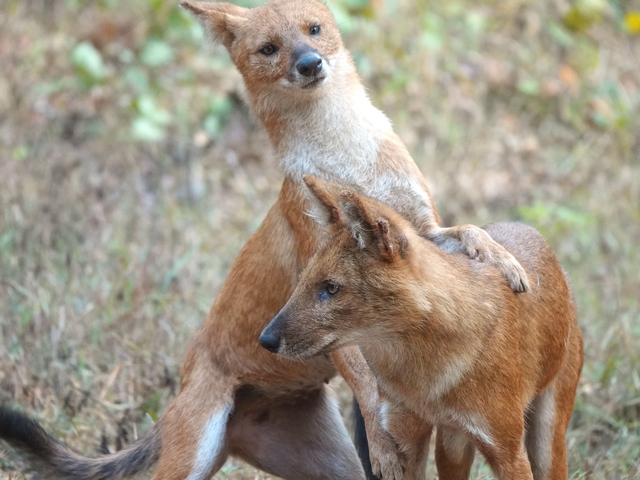 Watching these two dhole (Asiatic wild dogs) perform a playful morning greeting ritual, with just our vehicle and the forest as witnesses, is one of my favorite Indian safari memories.
Safaris in India reveal leopards, lions, rhinos, jackals, sloth bears, and myriad species of deer and antelopes, plus an astonishing array of birds (1250+ species). The empty Himalayan landscapes of Ladakh harbor some of the world’s most rare and intriguing wildlife, from the mythical snow leopard to Tibetan wolves, Himalayan brown bears, blue sheep, lynx, and ibex. Ladakh’s blissful emptiness and ethereal landscapes sear a place in your soul, and it’s somewhere that will continue to draw me back, far from crowds and the hectic overstimulation of everyday life.
 The dry deciduous forests of Central India are home to the adorably shaggy sloth bear, with Satpura National Park being the best place to spot these elusive creatures.
 We saw these guar (Indian bison) in Kanha National Park, where they remained on the lookout for any tigers that might be lurking nearby.
 The technicolored Indian roller is even more stunning when viewed in flight, and is one of the 1250+ bird species you might encounter during your travels.
 These massive Himalayan ibex we spotted while tracking snow leopards in Ladakh moved through the rugged hillsides with astonishing agility and grace, key to their survival and ability to evade predators.
Myth: India is Best For Backpackers and Budget Travelers
Reality: India boasts some of the most jaw-dropping luxury accommodations and high-level guiding that we have experienced anywhere in the world.
I still remember my first impression of India when I touched down in New Delhi in the middle of the night after hours of cross-continental travel: utter and complete astonishment. My jet-lagged brain simply could not comprehend the level of cleanliness, comfort, and opulence that we were immediately confronted with. Our warm and approachable guide had met us at the airport at 2:00 a.m. and brought us to a brilliantly decorated hotel just minutes away, complete with soaringly high ceilings, glittering chandeliers, and welcoming smiles at every turn. We were quite hungry despite the hour, and we soon found ourselves sitting in the hotel’s stylish but comfy restaurant, devouring the most flavorful and succulent chicken biryani I have ever had.
 Just another one of India's cozy, stylish restaurants - a far cry from the backpacker stereotype!
I hadn’t expected the level of atmospheric elegance and over-the-top service that we were immediately met with, and I now have seen that India boasts some of the world’s most jaw-dropping luxury hotels and impeccable service - all to be had at a significant value compared to other global destinations. You can literally stay in a palace, sip a drink beside a tiger-filled wilderness at an upscale safari lodge, wake up to mind-shattering views of the Himalayas from a luxurious mountain retreat, or unwind at lavish havelis (family-homes-turned hotels) that feel more like private sanctuaries than hotels. The lack of a language barrier, since many hospitality workers grew up learning English, results in effortless communication with hosts and guides, and to this day, the guides we have had in both Ladakh and Central India remain some of my all-time favorites. The people of India show genuine curiosity, heartfelt kindness, and endearing enthusiasm that foster meaningful connections that will keep you coming back.
 This elegant, grand heritage hotel in Jaipur was the first royal mansion of the city, originally built in 1727.
 Staying in some of India's heritage hotels is like staying in a three-dimensional work of art - that's what you get when you stay inside an actual historic palace!
 Just like in Africa, there are a wide range of accommodations to choose from on safari - and you will not be roughing it!
 Not what first comes to mind when first-timers hear "India" and "camp" in the same sentence, but the reality you will encounter when staying at a luxury tiger safari camp.
 Indian hospitality is some of the finest we have experienced anywhere on the entire planet, with welcoming staff who are always eager to help.
 India boasts many highly educated guides with excellent English language skills and superior subject matter expertise.
 Even in densely populated cities like Varanasi, you can still escape the crowds with private dance performances, music recitals, and yoga sessions.
Myth: India Is Not Safe For Travelers
Reality: India currently falls under a Level 2 advisory from the U.S. State Department - the same designation as France, Italy, Sweden, and the UK.
As an independent woman who loves to explore, personal safety plays a huge role in how much I enjoy a destination. Nothing kills the joy of travel faster than feeling confined to your hotel or constantly on guard, and I can honestly say that I have never felt unsafe in the parts of India that I’ve visited, including Delhi, Agra, Jaipur, Varanasi, Uttarakhand, Ladakh, and beyond.
The majority of India currently (and typically) falls under a Level 2 advisory from the U.S. State Department, with higher advisories limited to specific regions due to crime or terrorism concerns. That same Level 2 designation also applies to destinations such as France, Italy, Sweden, and the United Kingdom.
From my experience, the most common annoyance travelers are likely to encounter is persistent requests for money in busy tourist areas, particularly in cities such as Agra, but I never found these interactions threatening. The fact that I felt comfortable going for solo morning runs throughout Ladakh and Uttarakhand says a great deal, as that is something I will not do in many parts of the world.
 I feel so safe in Leh that I would often go exploring or for early morning runs on my own, something I will not do in many parts of the world.
One of my favorite memories that highlights how safe I felt in India was wandering alone through the maze-like alleyways of old town Varanasi without a guide. I’m a pretty good navigator, but I quickly became completely lost among the narrow lanes, ancient buildings, twisting markets, and streams of pilgrims making their way toward the Ganges River. I eventually popped out of the disorienting labyrinth back at the ghats on the Ganges and was easily able to navigate back to my hotel. As I wandered back, it struck me how cool it was that I was in this bustling city, completely lost and surrounded by crowds of people, yet I felt perfectly safe. This makes sense when you realize that the majority of people in Varanasi are pilgrims seeking to cleanse their spiritual karma in one of the holiest cities on Earth - petty crime is not the way to attain spiritual liberation!
 As a city filled with pilgrims looking to cleanse their spiritual karma, you are unlikely to encounter trouble when exploring the colorful markets and alleyways of Varanasi.
Myth: India is One of the Poorest Countries in the World.
Reality: While poverty certainly exists in India, the country has experienced significant modernization and economic growth over the past two decades, and it is no longer accurately defined by the level of poverty many travelers imagine.
My first trip to India in 2011 was one of my earliest experiences traveling outside the United States to a developing country, and there are a few images from that journey that have stayed with me. One of the biggest culture shocks was witnessing widespread open defecation by farmers in their fields during the early morning hours, something that I had never seen before.
I also remember visiting a small Himalayan village well off the main tourist track, accessible only on foot or by mule, where residents lived primarily as subsistence farmers without mechanized agricultural equipment. I distinctly recall watching a very pregnant woman working in the fields, dragging a plow across the soil, while energetic children bounded about, their clothing worn from daily life and play. Water was collected in buckets from a nearby river or the occasional community tap, and it was a striking introduction to the realities of everyday life in a region with limited modern infrastructure.
 This rural Himalayan farming village in Utarrakhand can only be reached by mule or foot, and all labor is done by man or animal, rather than machine.
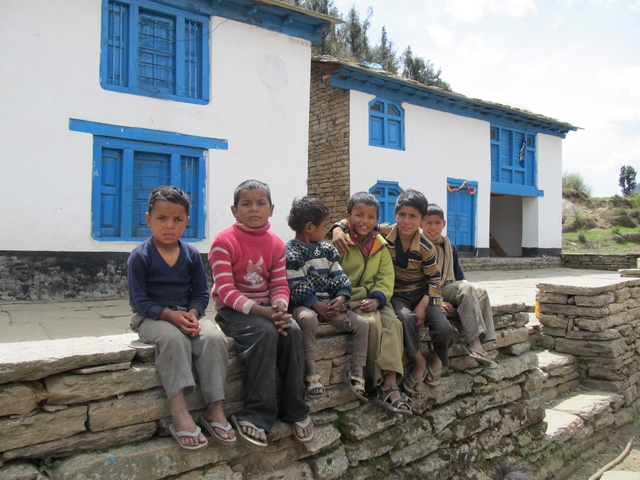 These young boys in a rural farming village in the north were curious, playful, and a delight to interact with - we even played a couple of rounds of cricket with them!
Fast forward to my return trips to India in 2023 and 2025, and I was completely struck by how much India had modernized and changed since my first visit in 2011. Traveling across northern and central India by rail and road, I did not observe open defecation on my last two trips, and instead saw widespread improvements in sanitation infrastructure, including the proliferation of basic cement-block toilets dotting the countryside in many rural areas.
I was curious if my perceptions of improvement were accurate, and the data support my observations: open defecation rates have declined dramatically over the past decade, and extreme poverty levels have also fallen significantly. I also observed visible changes in rural life, including increased mechanization in agriculture, improved road infrastructure, and far greater access to electricity and indoor plumbing in many areas.
 I was shocked to see expensive tractors like this in rural Central India in 2023, a testament to the investments that the government has made to help boost poor farming communities.
Does poverty still exist in India? Of course. Will travelers still encounter it? Yup. Especially in urban centers and certain rural regions, as is the case in many parts of the world. But the idea of India as a country defined solely by pervasive poverty is outdated. Modern India is a complex blend of extraordinary innovation, rapid development, deep inequality, and enduring tradition, and it is this complexity and juxtaposition of worlds that make traveling there so compelling.
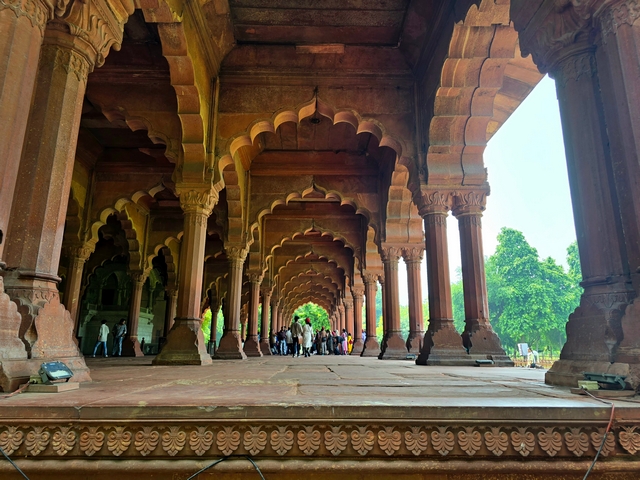 Built at the height of the Mughal Empire, Delhi's Red Fort reflects the extraordinary wealth that has long existed in India, a country where prosperity and poverty have coexisted for centuries.
If you’ve never been to India and you are someone who enjoys culture, history, the arts, or wildlife, I hope this blog has opened your eyes to the incredible beauty, diversity, and richness that India has to offer. Many of the negative stereotypes that surround this dynamic country are unfair and outdated, but they certainly persist.
I will close with a quote from my own husband and Moraway Adventures CEO, Chris Moriarty, an India skeptic who had a change of heart after his first visit:
“I had low expectations for India before I went, and held pretty negative pre-conceptions. I have never been anywhere else in the world where my expectations were consistently and systematically exceeded in every single category. Food, culture, history, religion, wildlife, remote places; India truly exceeded every expectation that I had, again and again. I'm a total convert and having been to India twice already, I'm already looking forward to my next adventure there!”
When you are ready to discover the incredible beauty and depth that India has to offer, reach out! We would love to help you plan your dream India odyssey.
 Note the genuinely happy smile of a former India skeptic after a day full of laughter, connection, and incredible cuisine at a home visit in Rajasthan.
Your Wild Adventure Aficionado,


