

For anyone planning an African safari, whether you are a first-timer or not, choosing where to go can feel overwhelming. With dozens of countries, hundreds of parks and private reserves, and wildly different experiences on offer, it’s not an easy decision. Add in the emotional weight of a long-awaited, once-in-a-lifetime journey to a place you may never go again, and the stakes are high.
Spend a few minutes searching online, and you’ll quickly find the same familiar recommendations repeated again and again: Kenya, Tanzania, South Africa, and maybe Botswana. While these iconic destinations have earned their reputations, the reality is far more nuanced, and Africa has so much more to offer.
 Africa's wildlife is waiting, and an unforgettable safari starts with picking the right safari destination for your specific interests.
After nearly three decades and hundreds of days spent on safari across the continent, we’ve learned that there is no single best place for safari, only the place that is right for you. The difference between a good safari and an unforgettable one comes down to aligning the destination with your specific interests, travel style, pace, and expectations.
So how do you begin to narrow it down?
Here are the key considerations we use when helping our guests choose the safari destination that is right for them.
Choose the Right Time for Your Safari
If there’s one factor that dictates everything on safari, it’s timing.
We saw this on our recent trip to Kenya during its typical February dry season, only to be met with rains that came a month early, transforming the landscape overnight. Africa doesn’t run on a fixed calendar, and weather patterns are more unpredictable than they used to be, but understanding seasonal patterns still helps stack the odds in your favor of not having your safari be a complete washout.
You won’t find the sprawling herds of the Great Migration in the southern Serengeti in July, and heavy rains can impact everything from road access to flash flooding risk and daily activities. We can attest from our recent, unexpected rains in Kenya that it’s hard to enjoy a sundowner when it’s pouring buckets and you can’t see the sun. As a general rule, Southern Africa shines from May through October, while East Africa has two excellent windows: June through October and mid-December through February. With unpredictable weather patterns on the rise around the world, we advise sticking within these date ranges to optimize your experience - shoulder season travel is getting increasingly risky for nature-based activities.
One of the first and most important questions we ask of our guests is when they can travel, as that immediately helps to focus the options.
 Witnessing a river crossing of the Great Migration is an unforgettable spectacle - one that requires careful planning to stack the odds in your favor.
How Long Should I Go On Safari For?
In addition to when guests can travel, the next question we may ask is for how long, as available travel time shapes the safari experience more than many realize.
We often have guests come to us wanting to squeeze too much into a short trip, and we help them realize that the magic of safari lies in slowing down. Travel days connecting one park or reserve to another are rarely the highlight of anyone’s trip, and people with less time will appreciate maximizing their experiences more than maximizing their destinations visited.
If you only have 8 to 10 days, we often guide travelers toward destinations with easier access, like Kenya or South Africa. Most of Africa’s true delights require a little more time, and if you have that, the map really opens up, whether that’s the remote wilds of Namibia or Zambia, or pairing a safari with the barefoot luxury and deserted beaches of Tanzania’s Pemba Island.
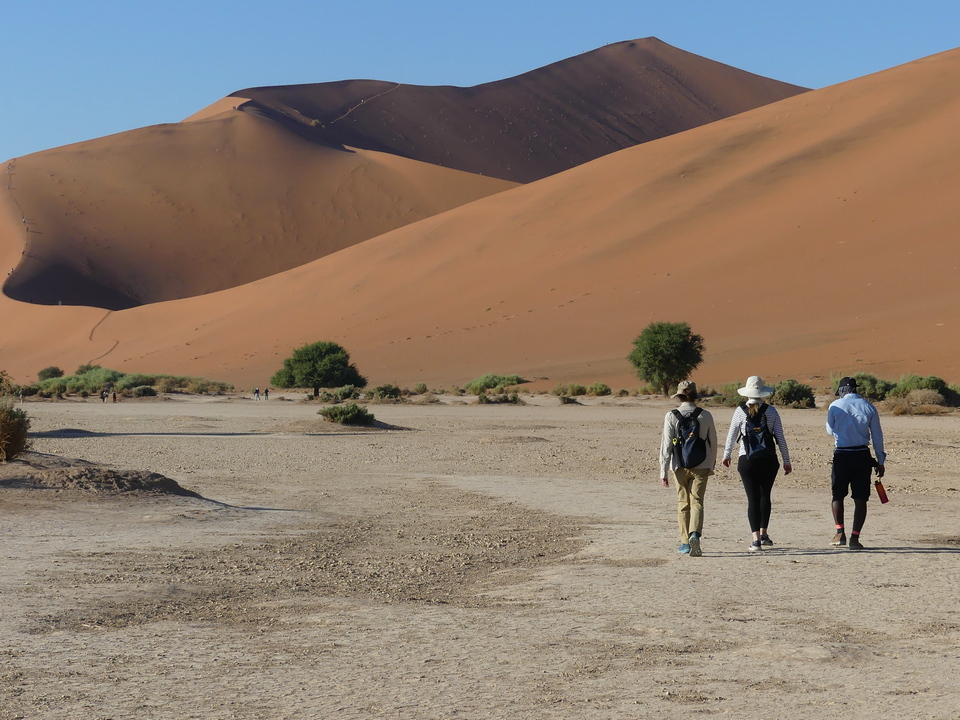 Namibia's dreamlike desert landscapes harbor an entire world of highly specialized plants and animals - but you need to allow plenty of time to cover Namibia's vast distances and experience the best of this exceptional country.
Choosing a safari destination that best aligns with your time is key to maximizing your experience, and we highly recommend aiming for a safari that’s at least 10 to 12 days long. Longer itineraries are always possible, and we've had guests sometimes travel for over 40 days!
How Much Does an African Safari Cost?
There’s no way around it: an African safari is an investment of both time and money. Where you go has a huge impact on how far your budget stretches.
For example, tracking mountain gorillas in Rwanda comes with a $1,500 per person daily permit, while neighboring Uganda offers the same wildlife experience for nearly half the permit fee. A fly-in safari across Namibia or the Okavango Delta delivers incredible access and exclusivity, but at a premium price tag.
 Gorilla tracking permits in Uganda are about half the cost of permits in Rwanda, and the wildlife experiences are just as incredible.
On the other hand, we’ve had guests absolutely blown away by the value in places like Zimbabwe, where exceptional guiding, fewer crowds, and beautiful camps come together in a way that often surprises people.
 Zimbabwe is Africa's best-kept secret for wildlife-packed safaris in true wilderness, without the crowds.
Knowing your budget helps narrow the options and spend intentionally, maximizing what you get, and not just how much you spend.
Planning Your Safari to See Specific Wildlife
For many travelers, there’s a moment that sparks the dream. Maybe it was seeing elephants at the zoo as a kid, or watching a dramatic documentary on African wild dogs. Or maybe on your first safari, there was that one elusive species that remained just out of reach.
 With approximately 6,000 individuals left, the African wild dog is an endangered species that you are not going to see just anywhere - but when you do see them, you will be captivated by their gigantic ears and playful behavior.
While nothing in the wild is guaranteed, choosing the right destination at the right time of year can dramatically improve your odds if there is a particular animal you want to see. Some parks and reserves are renowned for viewing particular animals at certain times, and it’s important to stack the odds in your favor.
 Leopards are the most notoriously difficult to spot of all the Big Five - but there are a few corners of Africa where you are much more likely to see them due to population density, habituation to vehicles, and successful conservation practices.
This is where generic safari advice from less-than-experts falls short. If there’s something you really want to see, it matters, and crafting an intentional itinerary will help set you up for success.
What is Your Safari Travel Style?
Having been all over Africa for nearly three decades, we can attest that not all safaris feel the same, and the vibe of a particular destination, or even specific safari camps, is an important factor when planning your dream trip.
 The canvas tents in this simple safari camp have everything you need - comfy bed, ensuite bathroom, and a nice amount of space - but not much more.
 This stunning, high-end safari camp boasts spacious chalets with contemporary decor, private plunge pools, indoor-outdoor showers, and every creature comfort you can imagine - a far step above the basic tented camp.
Some travelers are drawn to the sweeping landscapes and romantic nostalgia of Out of Africa. Others want raw wilderness: no fences, no other vehicles, just the sounds of the bush and the feeling of being transported in both time and place.
 The abundance of big cats in Kenya's Maasai Mara and the surrounding reserves is unrivaled throughout Africa, but true wilderness lovers may be put off by the constant proximity to roads, livestock, villages, and other signs of human impact.
 Wilderness aficionados will find their happy place in the vast and untamed wilds of Zimbabwe or Zambia, where nature still reigns supreme, and you won't see the lights of distant vehicles or villages at night.
We’ve planned trips for families looking for ease and flexibility, couples celebrating milestones, and seasoned travelers chasing their most immersive experience yet, whether that’s spending the night in an actual Maasai village or in a mobile safari camp, sleeping under the stars.
 Families with kids will delight in choosing destinations and specific camps that engage children with hands-on, active experiences, whether that's spotting elephants by kayak or seeing the savanna by mountain bike.
Choosing the right destination starts with understanding the experience you’re after. After your trip, what stays with you the most isn’t just what you saw, it’s how it all made you feel.
Safaris Beyond the Game Drive
One thing we love about safaris is that we not only get to enjoy up-close encounters with the world’s most charismatic wildlife, but that there are also so many ways to experience that wildlife above and beyond the traditional game drive.
 A good night drive reveals an entirely different cast of characters than your typical daytime safari, but night drives are only allowed in certain private reserves and community conservancies.
Some of our most memorable moments on safari haven’t been from a vehicle at all: gliding silently in a mokoro through the shimmering waters of the Okavango Delta; approaching elephants on foot on a world-class walking safari in Zimbabwe’s Hwange National Park; or watching the sunrise over the vast expanses of the Serengeti from a hot air balloon, with massive herds of zebra and wildebeest stretching across the plains below.
 Gliding through the reflective waters of the Okavango Delta in a traditional mokoro (dugout canoe) is a quintessential Okavango Delta experience.
 There is nothing more exciting than approaching wild elephants on foot under the guidance of Zimbabwe's exceptionally trained professional guides.
 A sunrise hot air balloon ride over the Serengeti is a fun and memorable way to gain a whole new perspective on this vast ecosystem.
The right safari destination for an active traveler who can hardly sit still is going to look very different from the perfect place for someone who just wants to relax, and maybe even immerse a little more into food and culture in addition to wildlife.
Different destinations unlock different experiences, and those experiences will define your entire trip.
With so many variables at play, choosing where to go on safari isn’t about picking a destination off a list; it’s about knowing your own desires and understanding the possibilities beyond the usual suspects.
 Some safari destinations offer excellent opportunities to interact with the local communities and learn about culture, while other destinations are more singularly wildlife-focused.
So there you have it, some key considerations to think about when starting to plan an African safari. If you want to dive even deeper into how to select a particular country for safari, this blog will help you gain a better understanding of what East Africa has to offer, while this blog highlights the essentials of understanding Southern Africa.
When you are ready to start turning your safari dreams into a reality, reach out! We are happy to help you cut through the noise and choose a destination that’s perfect for you, based on nearly three decades of experience across the African continent.
Your friendly safari expert,


