

In honor of World Reef Day (June 1), World Oceans Day (June 8), World Sea Turtle Day (June 16), and Day of the Seafarer (June 25), we want to take the opportunity to highlight one of our favorite ocean-based destinations, the pristine archipelago of the Galapagos Islands in Ecuador. Grab your binos and snorkeling gear, slather on some reef-safe sunscreen, and let’s explore our top ten favorite creatures we have seen in the Galapagos!
No visit to the Galapagos is complete without meeting a Galapagos giant tortoise! In fact, the islands themselves were named after these enormous reptiles, as "galápago" is an old Spanish word for tortoise. These gentle giants can weigh more than 500 pounds and live for over a century, and there are 13 different species of them distributed throughout the islands. Depending on your itinerary, you may encounter them roaming freely in the lush highlands or visit one of the breeding centers that have helped restore wild populations. Watching a giant tortoise slowly lumbering across the landscape is a powerful reminder that evolution unfolds on a timescale far different from our own.
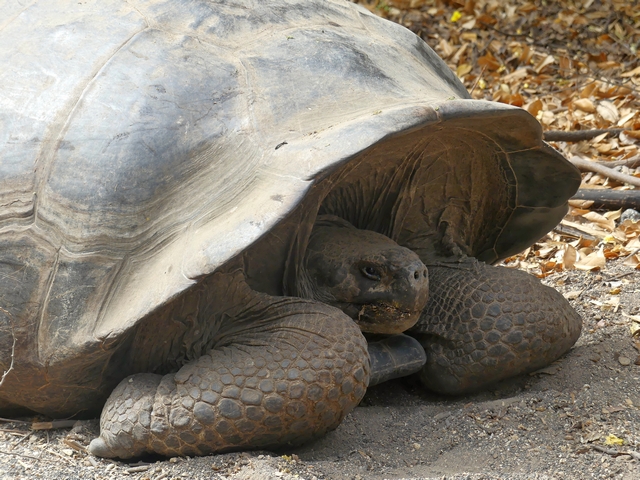 Isabela Island is home to five distinct populations of giant tortoises, including this Volcan Acedo giant tortoise we saw at Urbina Bay.
Marine iguanas are endemic to the Galapagos, and they are the only marine lizard species in the world. They are herbivores that feed on algae, and they can dive to depths of nearly 65’ underwater. Since they feed underwater and ingest a lot of saltwater, they have specialized nasal glands that help them sneeze out salt that is removed from their blood. There are 11 similar subspecies of marine iguanas distributed throughout the different islands of the Galapagos, with those from Isabela and Fernandina being the largest (males grow up to five feet long!). Their dark-colored skin helps absorb the sun’s heat after swimming, and the males turn brilliant shades of red and green during the mating season from December to March.
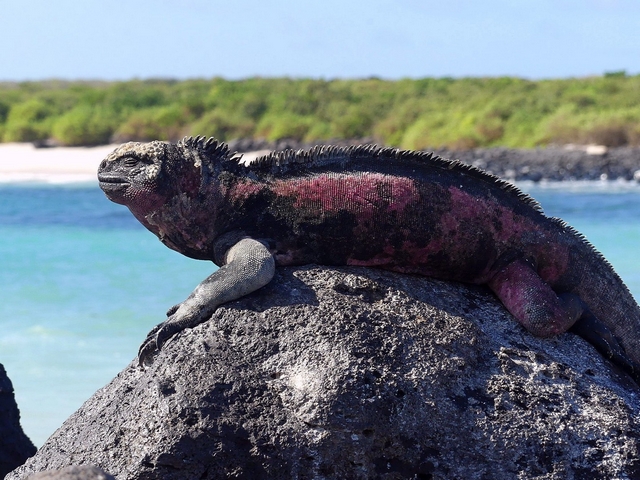 This male marine iguana is showing off his best colors as he basks in the sun on Española Island.
Galapagos sea lions are widely distributed throughout the islands, and you will likely encounter them sunning themselves on park benches or beaches, or perhaps begging for fish at the local market in Puerto Ayora. A highlight of visiting the Galapagos is getting up close and personal with these charismatic and intelligent creatures while you’re snorkeling. These curious, playful critters will not hesitate to swim right up to you and even look you in the eye, and it’s exhilarating to watch them twist and twirl so effortlessly through the water.
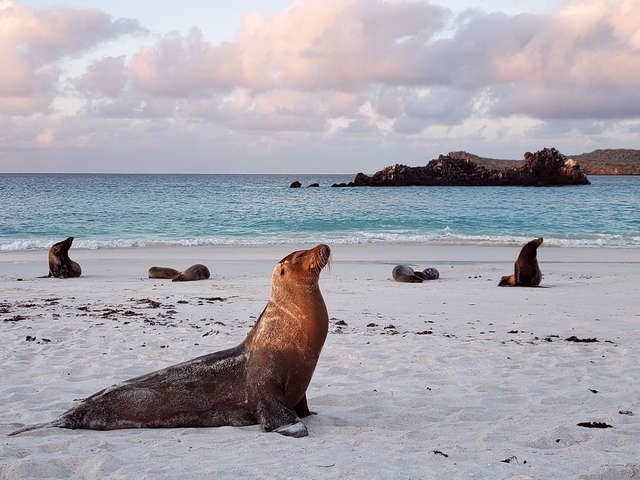 These sea lions showed off some impressive sunset poses for us on the pristine, sandy beaches of Española.
Galapagos green turtles are the only turtle species to breed and nest in the Galapagos, and you will see them year-round throughout the archipelago, with December through March being nesting season. Adults can grow up to 1.3 meters long and weigh almost 300 pounds. They are primarily vegetarians, and it’s common to see them foraging on sea grass and algae. Sea turtles return to the beach where they were born to lay their eggs, depositing 50 - 200 eggs in their nest. A highlight of our time on Española was watching several newborn sea turtles making their way toward the ocean, literally taking their first steps on the journey of life.
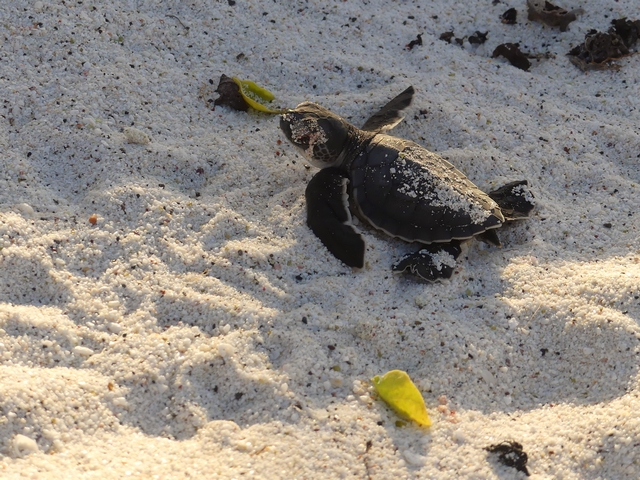 Watching this freshly-hatched sea turtle make its way across the beach, avoiding predatory mockingbirds along the way, is a memory that sticks with us from our first Galapagos trip.
The waved albatross is the largest bird in the Galapagos, with a wingspan of up to eight feet. Like all albatross, they are exceptional gliders who spend the vast majority of their lives above the open ocean, so keep a lookout while cruising at sea - you may even see them attempt to steal food from blue-footed boobies! Their main breeding grounds are on Española, where the mated pairs (who mate for life) lay eggs between April and June. The chicks will leave the colony in January of the following year and spend the next six years at sea before returning to find a mate of their own.
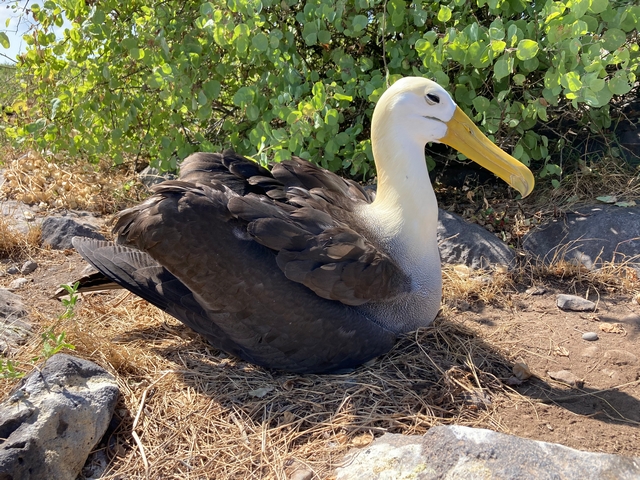 Getting to see albatross on their nests from only several feet away was a truly profound experience - we could not believe how calm and habituated these giant birds were in our presence!
Land iguanas are among the first animals many visitors encounter in the Galapagos (on my last trip, I could see one right next to the airstrip as soon as our plane touched down in Baltra!). You will see these colorful, prehistoric-looking reptiles lounging beneath cacti or wandering across the dry volcanic landscape on various islands. Unlike marine iguanas, land iguanas are terrestrial, feeding primarily on cactus pads, flowers, and fruit. Growing up to three feet long, they may look intimidating, but they are generally slow-moving and remarkably tolerant of human visitors and photo shoots.
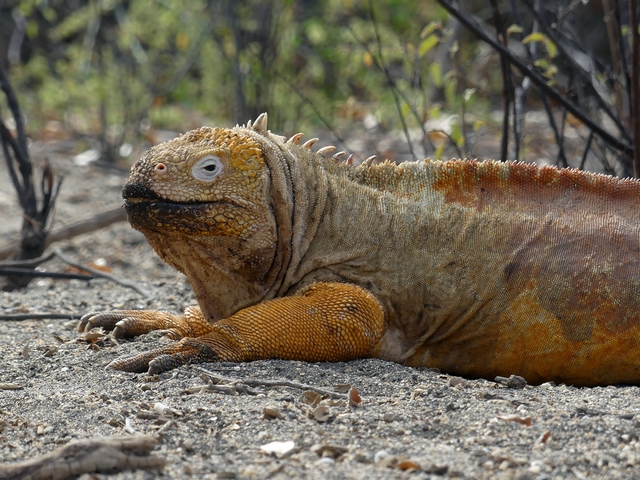 Land iguanas are a common sight throughout the Galapagos, and you may see them basking in the sun or munching on some tasty prickly pear cactus, their primary food.
The pristine waters of the Galapagos Marine Reserve provide excellent habitat for cetaceans (there are 24 cetacean species within the reserve!), and the Galapagos bottlenose dolphin is a common sight. These playful, acrobatic beings are year-round inhabitants of the islands, and you may see pods of them swimming, weaving, and jumping alongside your boat. You may even hear them clicking and whistling. The bottlenose dolphins found in the Galapagos have adapted to the relatively cooler pelagic waters there, exhibiting an extra layer of blubber compared to their cousins found in warmer waters.
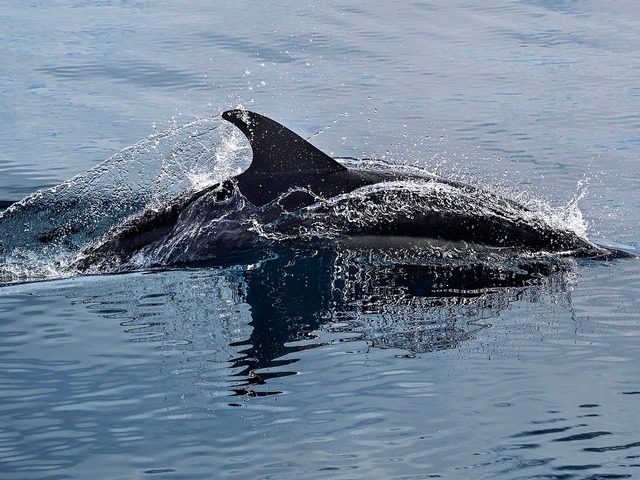 Having a playful pod of 60+ Galapagos dolphins chasing and playing around our Zodiac as we cruised Vicente Roca at sunset was the perfect ending to another perfect day.
Blue-footed boobies are perhaps the most iconic animals in the Galapagos, and for good reason. Their bright blue feet, clownish appearance, and entertaining courtship displays make them a favorite among visitors. During mating season, males perform an elaborate high-stepping dance to show off the vivid color of their feet, which is a sign of good health. They are also incredible hunters, plunging into the ocean from heights of up to 80 feet to catch fish. You'll likely see them perched on rocky shorelines, nesting along trails, or diving spectacularly into the sea.
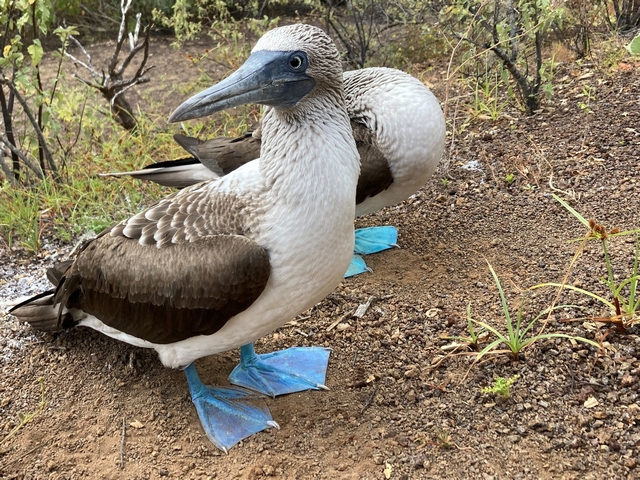 The blue-footed booby is an icon of the Galapagos, and the signature blue color of their feet comes from pigments in the fresh fish that they eat.
The Galapagos penguin is one of the rarest penguin species on Earth and the only penguin found north of the equator. These small, charismatic birds survive in the tropics thanks to the cool waters brought by the Humboldt and Cromwell currents. Most are found around the western islands of Isabela and Fernandina, and sightings are never guaranteed. Spotting one torpedoing through the water or standing atop a lava rock is often considered a special bonus during your Galapagos journey.
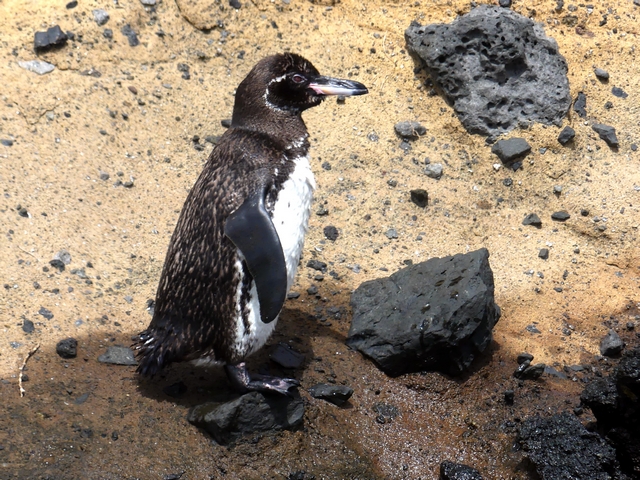 The Galapagos penguin is the only penguin species found north of the equator, and seeing them during your visit is a special experience.
The famous Galapagos finches may not be the flashiest animals in the archipelago, but they played a starring role in scientific history. Often called "Darwin's finches," these small birds evolved different beak shapes and feeding habits to take advantage of the diverse habitats found throughout the islands. Their adaptations helped inspire Charles Darwin's theory of evolution by natural selection. Keep an eye out for them while you are enjoying land-based excursions, and remember that these seemingly simple little brown birds fundamentally changed the way humans understand life on Earth.
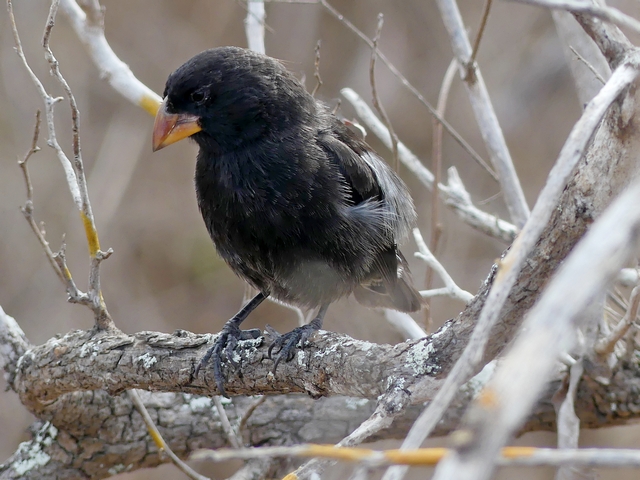 The 17 species of Galapagos finches are differentiated by their beak sizes and shapes, habitat, and feeding preferences.
When you are ready to experience close-up encounters with the curious and charismatic creatures of the Galapagos, reach out! The Galapagos is the perfect destination for couples celebrating a milestone, families wanting quality time together in nature, or solo travelers who just need a break. We’ve been there multiple times, and we are always available to help you craft a fully customized journey, whether that’s a luxury cruise on a small yacht or land-based explorations.
Your adventure aficionado,


