Into The Wild: Peru’s Trail Of The Apu Ausangate

There are some places that get under your skin and leave you yearning to come back, and Peru’s Trail of the Apu Ausangate trek is one of them.

My first visit was a quick scouting trip in 2021, and I fell hard for this extraordinary corner of the high Andes. In just two days, I was smitten by the eye-popping mountain landscapes, the vibrant mountain culture of the local Andean communities, and the cozy, community-run lodges. As I begrudgingly said goodbye after just 48 hours, I vowed to come back and do the entire trek someday.
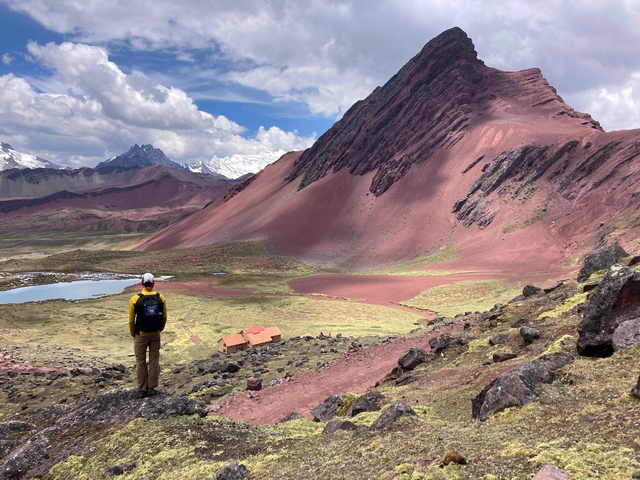
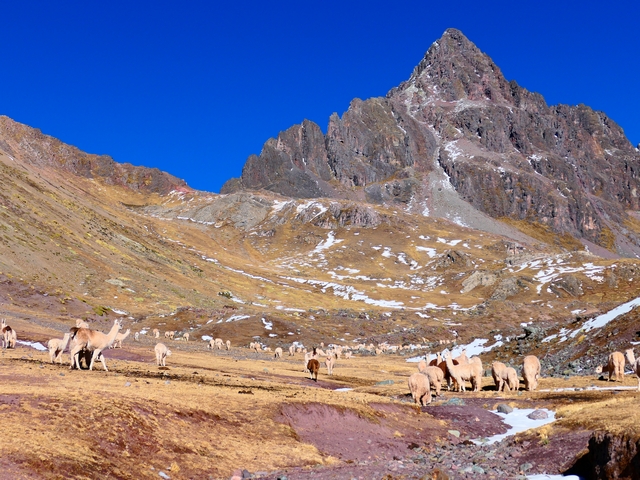
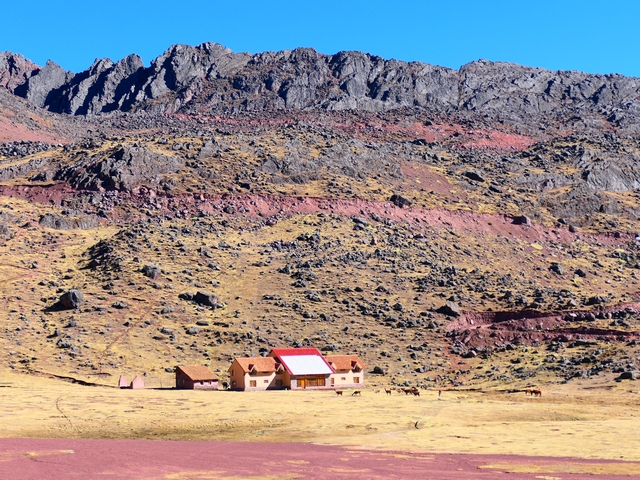
A hiker gazes out at stunning redrock mountain formations near Peru's sacred Apu Ausangate, with the community-run Huampococha Lodge visible in the valley bottom below.
My first glimpse at the stunning redrock landscapes near Huampococha Lodge back in 2021, and I was hooked!

Four years later, we made it happen. Last month, we spent five nights and six days trekking through Ausangate’s high country with a small group of friends, and Ausangate was even more spectacular than I remembered. Each day revealed dramatic scenery, remote wilderness, rewarding hikes, intriguing natural history, and an authentic glimpse at a traditional Andean lifestyle that hasn’t changed much in centuries (perhaps I will hightail it to Peru and raise alpacas when AI takes over!).

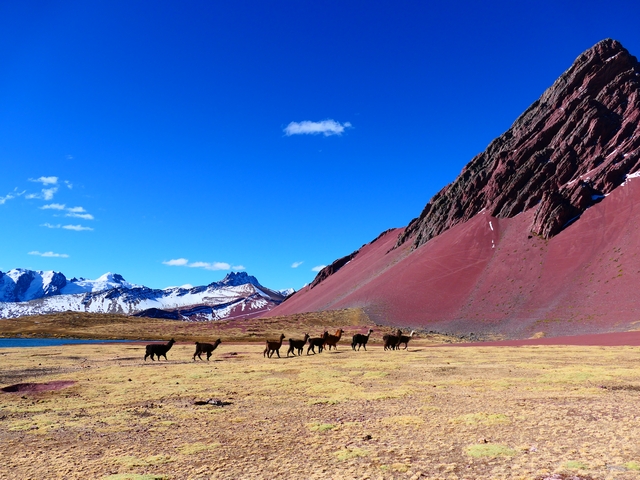
Dozens of alpacas grazing in front of a red rocky mountain near Anantapata Lodge on the Trail of the Apu Ausangate in Peru.

Best of all, each day ends at one of four community-run lodges, with a hot shower, a delicious meal, welcoming staff, and a comfortable bed. There’s no Wifi, no hordes of Instagrammers, and no distractions – just time to unplug, sit next to the woodstove with fellow trekkers, and be present as you sip a mug of coca tea and reflect on the day’s adventures.

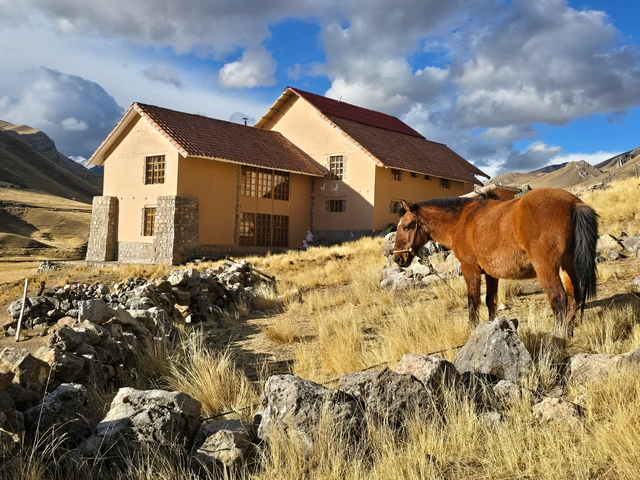
A brown horse bathed in afternoon sunlight, with the yellow buildings of Peru's Chillca Lodge in the background.
Chillca Lodge, where hot showers, excellent meals, and a comfy bed await inside.

This photo essay highlights the beauty of Ausangate, and the reasons why we LOVE the Trail of the Apu Ausangate – enjoy!

Himalayan Landscapes In Peru

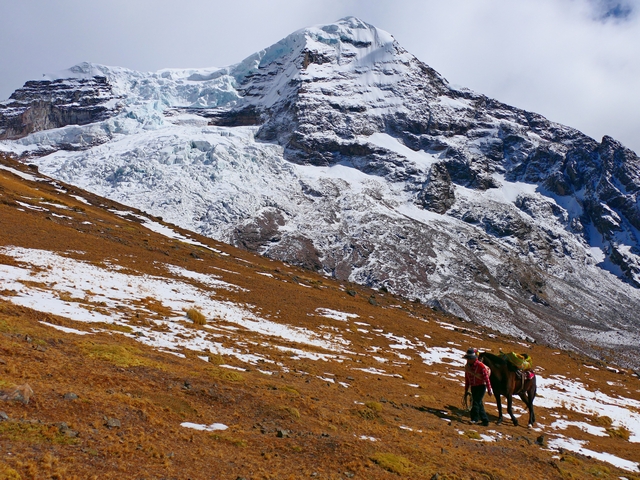
Ausangate Mountain is one of the sacred apus of Peru, and the local Quechua people view it not as a towering mountain covered in sprawling glaciers and jagged rock, but a living spirit that acts as a guardian and bridges the human and spiritual worlds. At 20,945 feet, Ausangate is the highest mountain in the Cusco region and one of the most revered sacred mountains in the Andes.

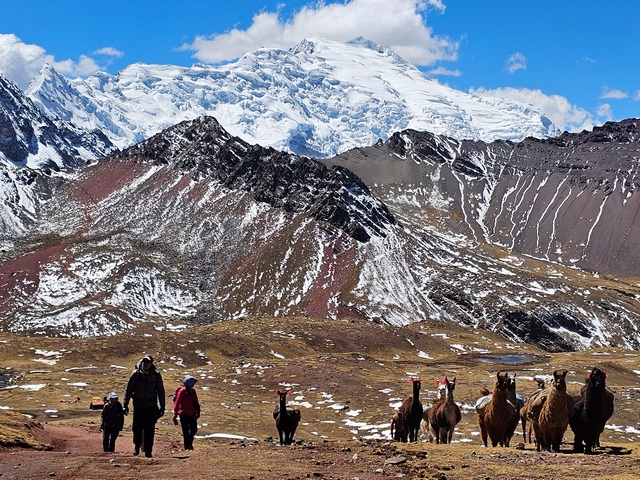
A group of trekkers and pack llamas walk toward the camera, with the towering, glaciated massif of Apu Ausangate dominating the mountainous landscape behind them.
One look at the sacred Apu Ausangate, and it's obvious why it's been worshipped by the locals for ages.

I’ll let the photos speak for themselves – the landscapes of the Vilcanota Mountain Range surrounding Ausangate are simply stunning, and they rival the Himalayas in their scale and grandeur. Each day near Ausangate reveals new views of endless mountains, alpine lakes, colorful mineral slopes, and expansive grasslands dotted with grazing alpacas.

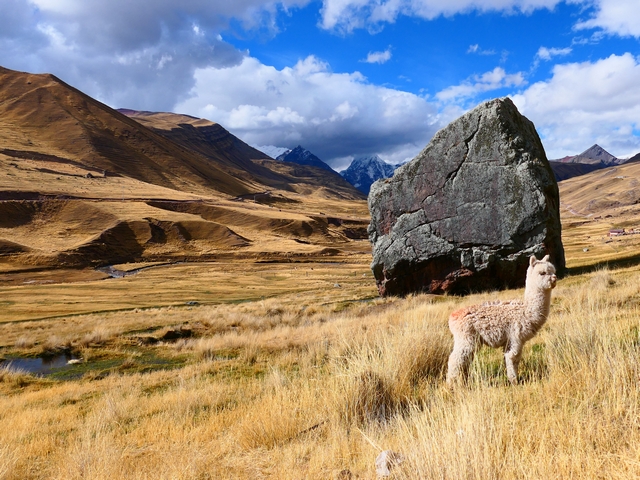
A lone alpaca is dwarfed by a giant boulder nearby in the yellow grasslands near Peru's Chillca Lodge, with distant high peaks near Ausangate visible beyond.
A lone alpaca stands guard just outside Chillca Lodge, the starting point of our trek.
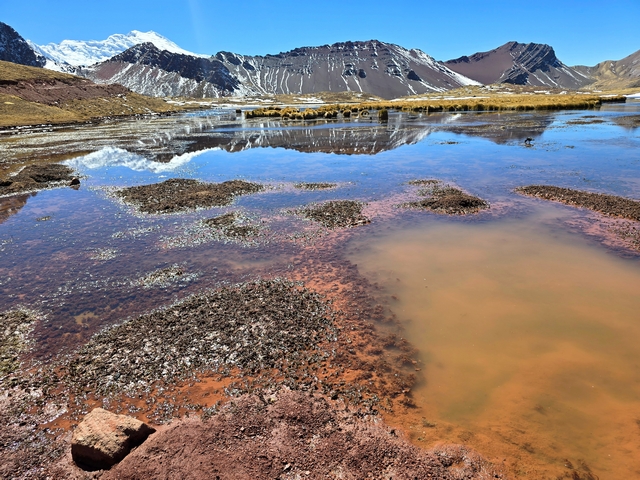
Mountains reflect in still blue waters of the high-altitude wetlands near Peru's Ausangate mountain.
The dramatic mountains of the Vilcanota Range make for excellent reflections in the region's many wetlands.
An Andean man with his horse stand in front of the towering, rocky, glaciated face of Peru's Ausangate mountain.
Apu Ausangate stands guard over the people and animals who inhabit the lands below.
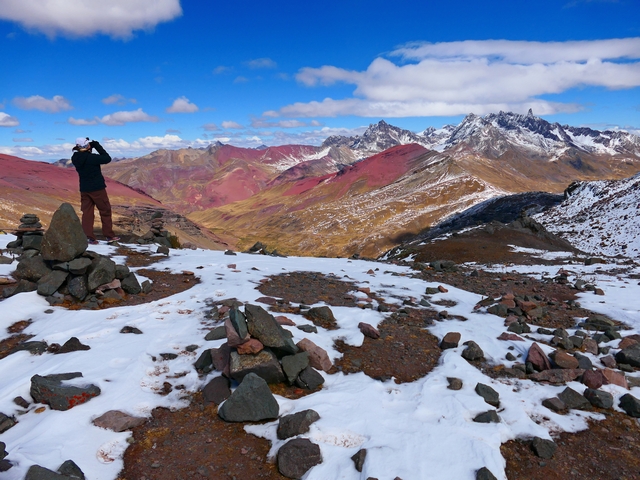
A hiker gazes out at the colorful landscapes near Rainbow Mountain, from the snow-covered slopes of Palomani Pass.
At nearly 16,800', Palomani Pass was the scenic high point of our trek.
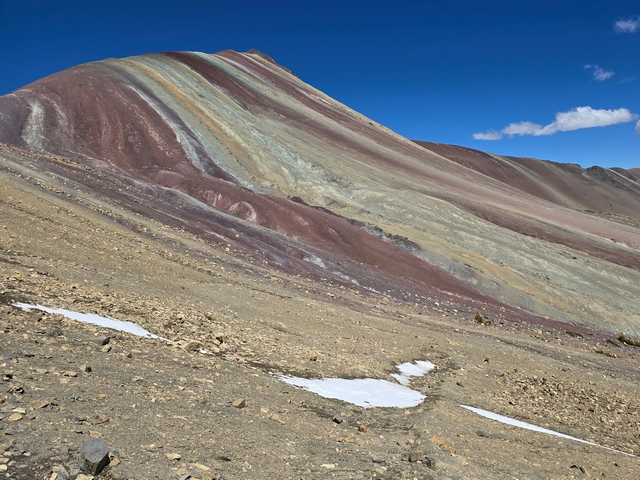
Distant shot of Peru's Rainbow Mountain, showing stripes of rich colors of red, ochre, green, yellow, and purple.
The Ausangate Trek takes you past the Rainbow Mountain, also known as Vinicunca in the native Quechua language.
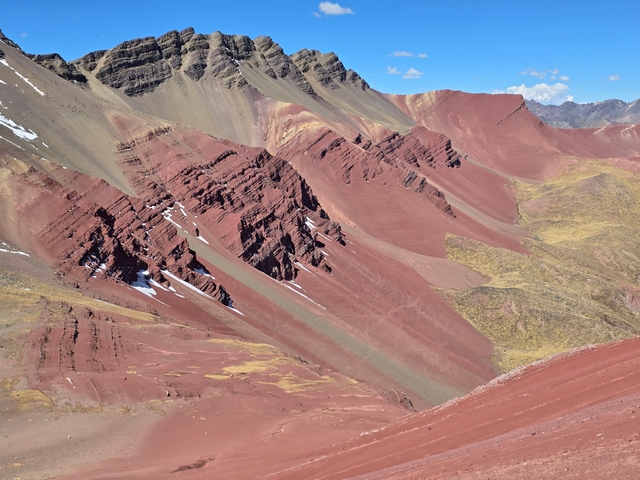
A jagged rocky peak with visible striped of sedimentary layers and rich red colored slopes in the Red Valley near Peru's Rainbow Mountain.
Just beyond Vinicunca lies the Red Valley, an equally impressive expanse of colorful peaks.
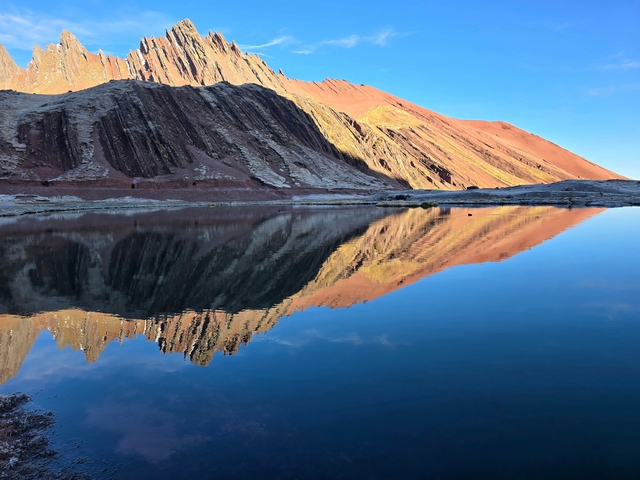
Jagged red rocky mountains reflecting in the still morning waters of Laguna Hampococha, Peru.
Morning reflections in Lago Huampococha make for a scenic start to the day.
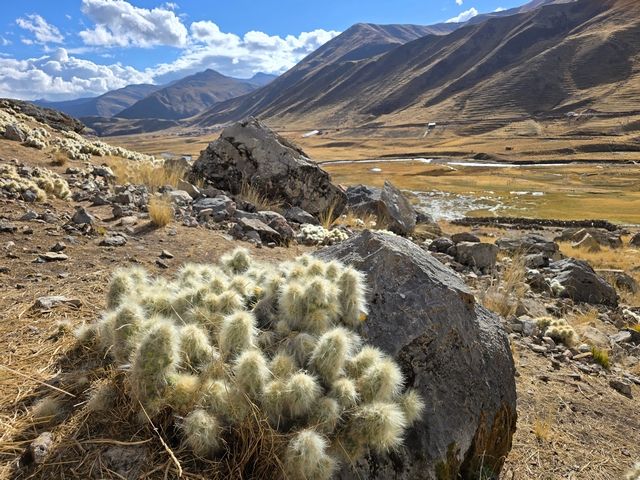
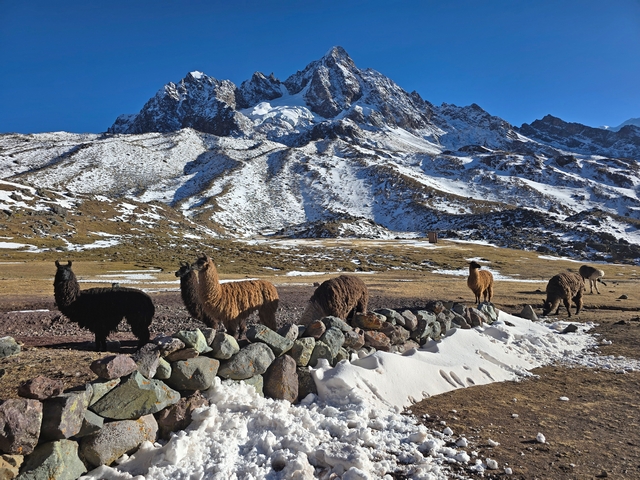
Six curious llamas look at the camera, with a snowy, rocky peak and clear blue skies behind them.
These jagged peaks near Anantapata Lodge look impressive until you compare them to the hulking massif of Ausangate, just out of the photo frame.
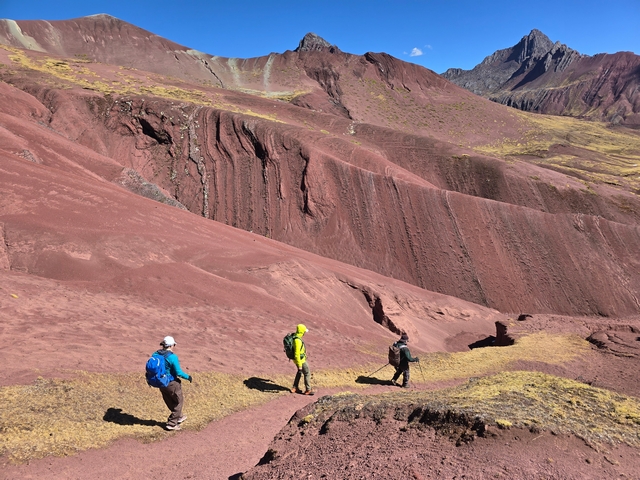
Three hikers walk down a smooth trail, surrounded by a mountainous landscape of deep red rocky peaks near Huampococha Lodge and the Red Valley, Peru.
Excellent trails meander through spectacular landscapes that never get old.
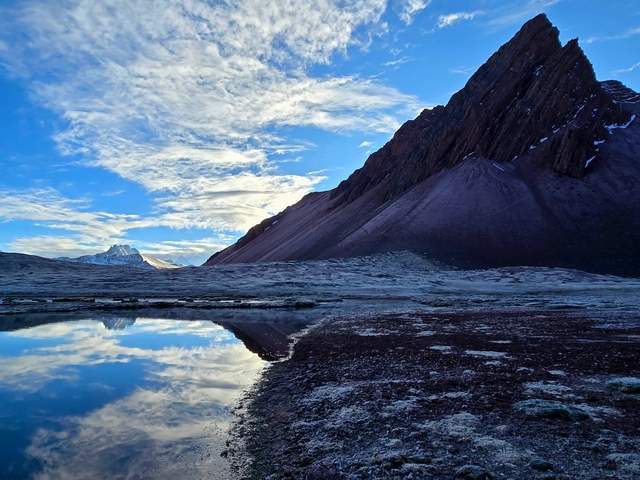
The triangular, jagged Chachacomayoc Peak reflecting in the icy morning waters of Huampococha Lake near Ausangate, Peru.
Ausangate's landscapes change by the hour, day, and season as sunlight and mountain weather work their magic.

Authentic, Community-Based Tourism

The four high-altitude ecolodges that connect the trek were established in 2006 in partnership with the local Quechua communities of Chillca and Osefina. The vision was to preserve the region’s traditional alpaca-raising and llama-herding heritage while creating a unique trekking experience that provides employment and economic opportunities through community-based tourism.

Each trek is supported by a team of local staff, including llameros who herd the llamas carrying your gear from lodge to lodge, chefs, housekeepers, and horse handlers. The llamas and horses used on the trek are owned by shepherds from the local communities.

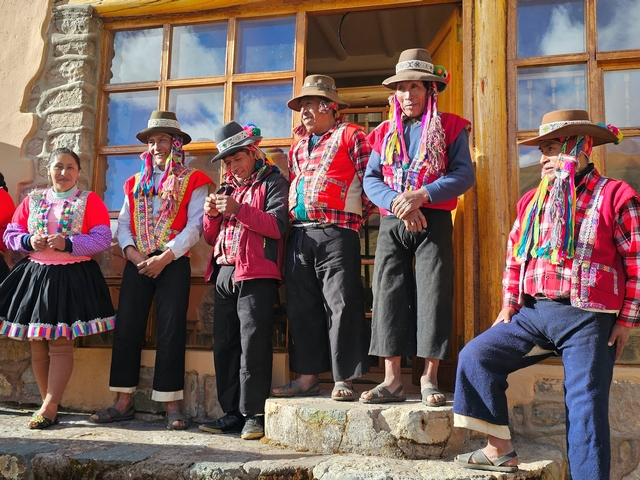
Andean Lodges staff stand outside Chillca Lodge in their colorful traditional dress, including colorful, hand-woven garments and traditional hats.
Our support staff included llameros, housekeepers, and chefs, all hailing from the nearby communities of Osefina and Chillca.

Witnessing the traditional way of life here is an unforgettable experience. The local people are true masters of their crafts, with knowledge and skills passed down through generations. I’ll never forget watching three llameros race to rescue a drowning llama who accidentally fell into a deep pool of water (!), or watching our two petite housekeepers crush out a rocky, snowy 17,000-foot mountain pass in their traditional dresses and sandals like it was nothing.

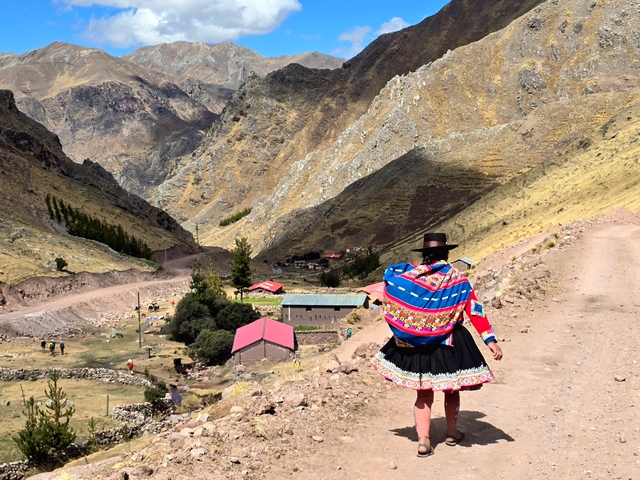
A Quechua woman walks down a dirt road toward a small village, wearing a black skirt, black hat, and carrying a woven bundle on her back.
Our housekeeper, Rosa, always wore her traditional dress and sandals, regardless of the terrain or weather.

You encounter very few other hikers along the route (with the exception of the day you pass by Rainbow Mountain), and each day you are immersed in a quiet and authentic slice of life in the high Andes.

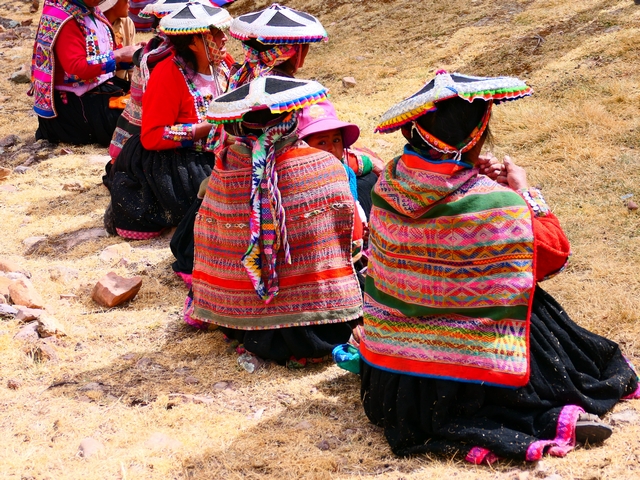
Six women in traditional Andean dress sit on the ground while spinning wool, wearing beautiful hand-woven garments characteristic of the Pitumarca region of Peru.
Local women still practice weaving techniques that have been passed down from mother to daughter for generations.
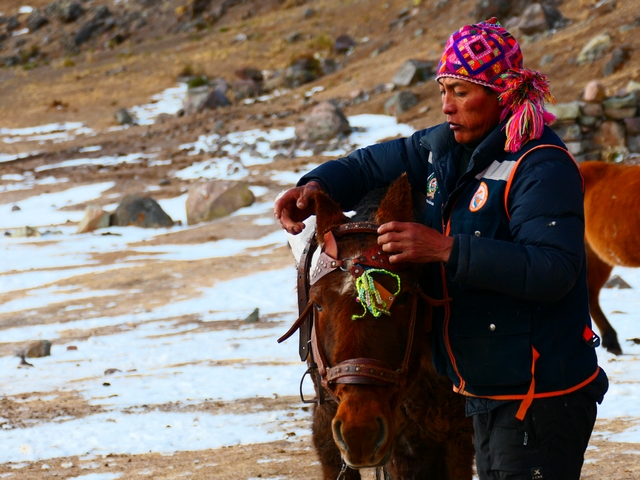
An indigenous Andean man wearing a hand-woven, pink wool hat saddles up a horse near Machuracay Lodge, Ausangate, Peru.
The men who supported our trek all wore distinctive, hand-woven pink hats whose patterns detail marital status and community belonging.
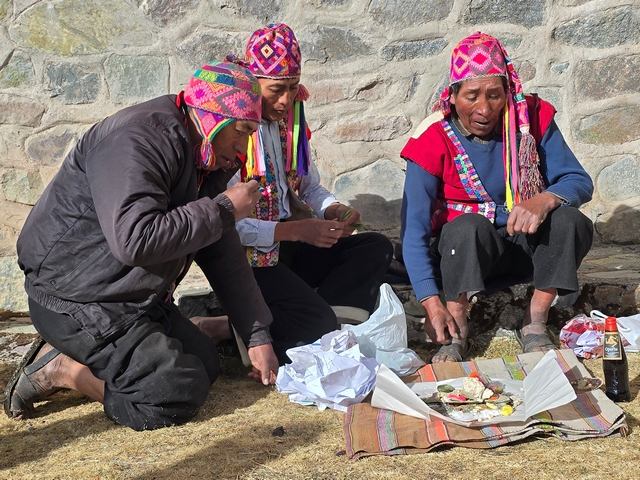
Three Andean men receive prepare offerings of coca leaves, sweets, wool, and more during a Pachamama ceremony at the base of Peru's Apu Ausangate.
Before heading up over the highest pass on our trek, a local priest facilitated a Pachamama ceremony, where we made offerings of coca leaves, wool, wine, sweets, and more to Pachamama and Apu Ausangate.
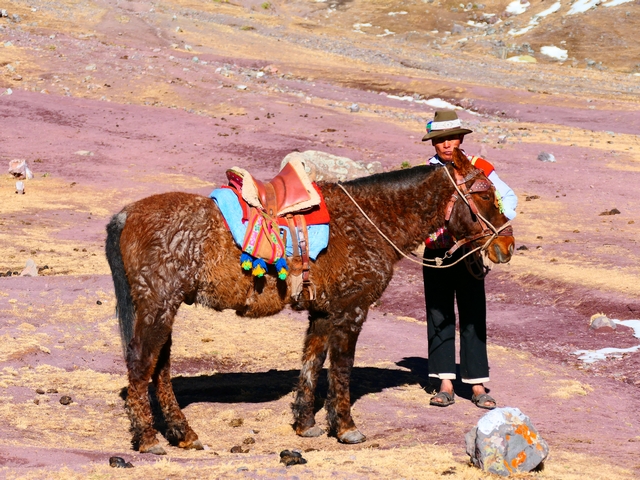
An Andean man in traditional dress stands next to his horse, which bears a beautiful saddle adorned with brightly-colored wool decorations.
Our horse packer, Andreas, has spent more than six decades driving horses and llama trains through the mountains.
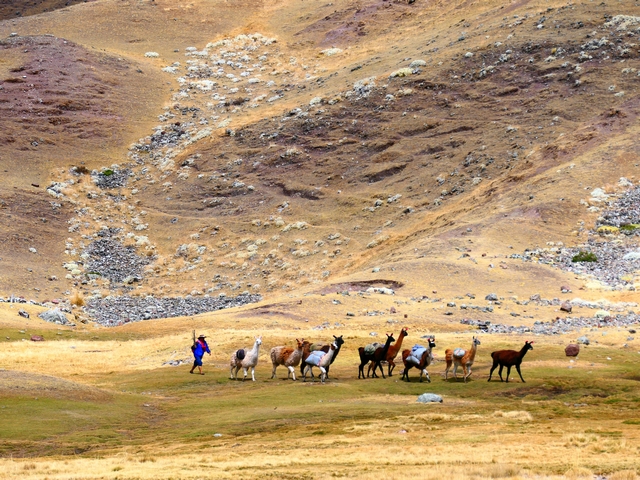
An Andean man herds a dozen pack llamas across the rocky grasslands near Peru's Ausangate Mountain.
Three llameros skillfully kept our pack train of llamas on track during each day's hike, making sure our gear ended up in the right place.
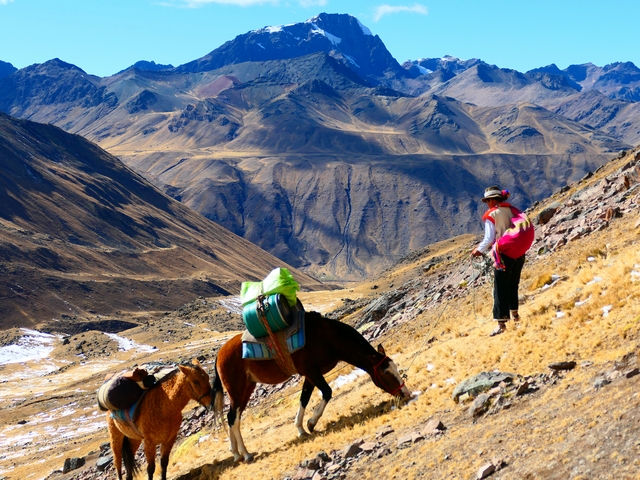
An Andean man in traditional dress leads his two pack horses up a grassy hillside, with stunning rocky mountains of Peru's Vilcanota Range visible beyond.
In addition to the llamas, our crew had several "emergency horses" to carry gear, resupply our drinking water during the hike, and carry anyone who might get sick or injured.

Alpaca-and-Llama Palooza

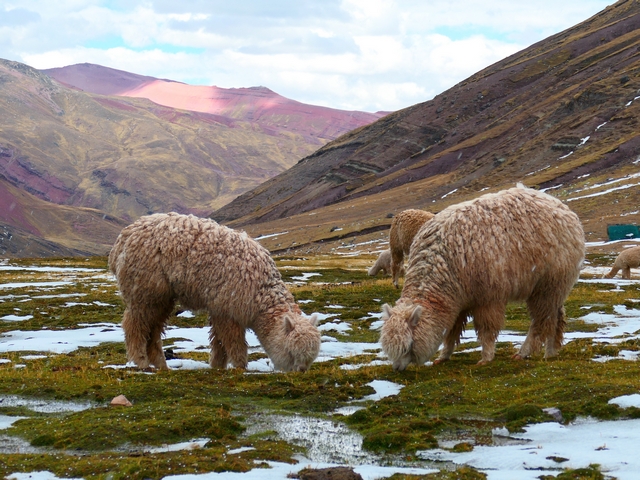
Llamas and alpacas are the lifeblood of the Ausangate region, where the high elevations make traditional agriculture difficult. For generations, alpacas have provided fiber for clothing and textiles, while llamas have been essential for transporting goods and providing meat and fiber.

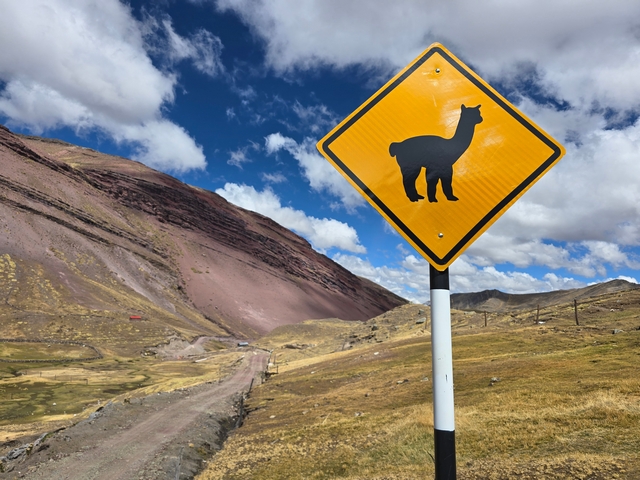
A yellow road sign indicating alpaca crossing, with cloudy blue skies and red mountains behind it.
Southern Peru is alpaca country, home to over 80% of the world's entire alpaca population.

It’s impossible not to stop for a photo as you pass massive herds, listening to their subtle humming sounds and watching them stare back at you with curious, doe-like eyes. Watching the llameros round up and saddle the llamas each morning is a comforting ritual, and throughout the Trail of the Apu Ausangate, llamas and alpacas far outnumber the humans you encounter.

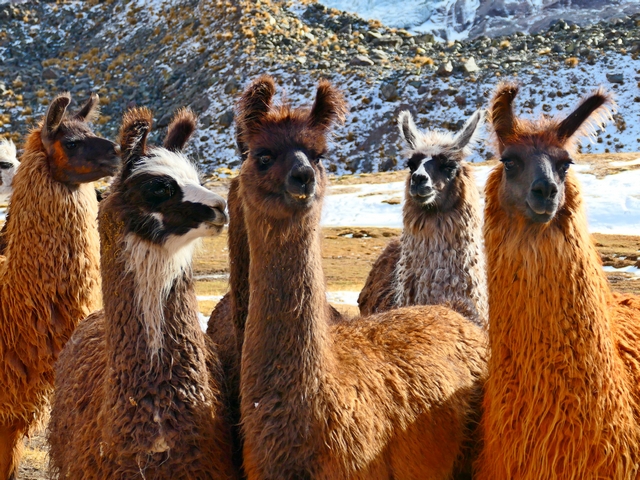
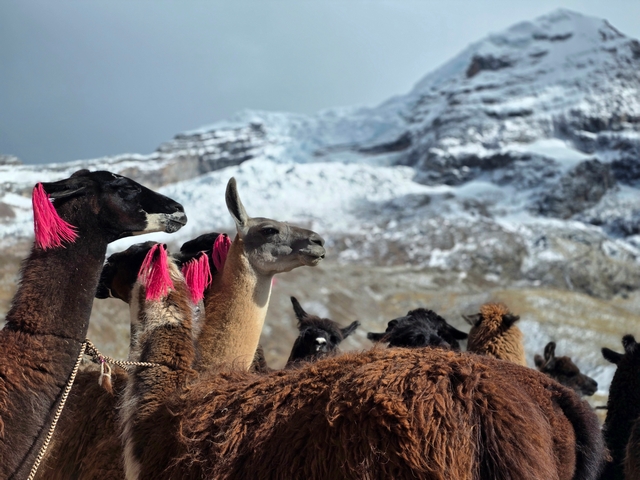
Close-up shot of the faces and necks of five red and brown llamas looking at the camera, their ears alert.
Llamas are the lifeblood of the Ausangate region, and an essential part of our trekking team.
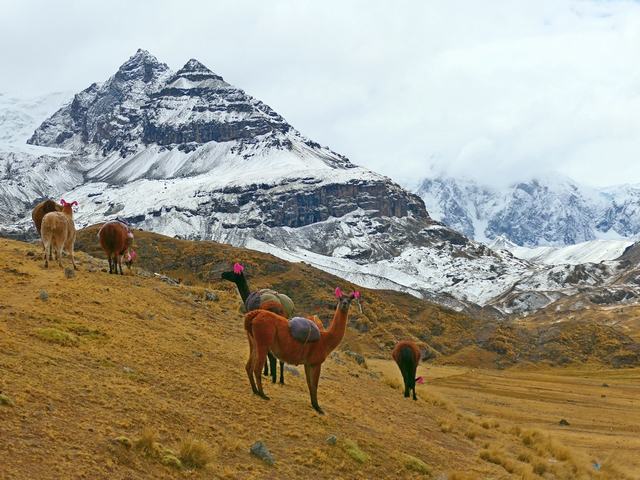
A pack llama adorned with saddle bags and ear decorations looks at the camera, with dramatic, snow-covered mountains near Ausangate beyond.
Llamas can carry up to 25% of their body weight, and historically played an important role in trade throughout the Incan empire.
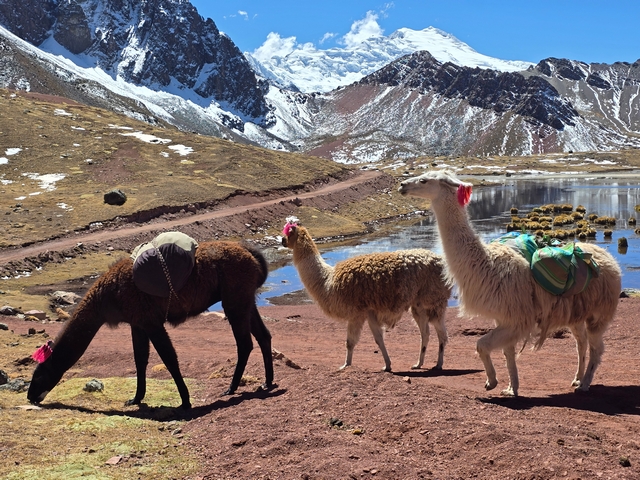
Three pack llamas graze in front of a beautiful blue lake, with the glaciated slopes of Ausangate Mountain visible in the background.
Colorful ear tassels have been used on llamas since ancient times to denote age, gender, ownership, health status, and other important information.
A small herd of llamas adorned with pink ear tassels gaze up at the sacred apu Ausangate just beyond them.
The Andean people believe that their flocks ultimately belong to the Apus like Ausangate, with their human herders just temporary guardians.
A dozen brown llamas graze in a flat area underneath the red, jagged, triangular summit of Chachacomayoc Mountain in Peru's Ausangate Region.
Llamas are highly social animals with a strong social hierarchy, with female matriarchs guiding the group's movements.
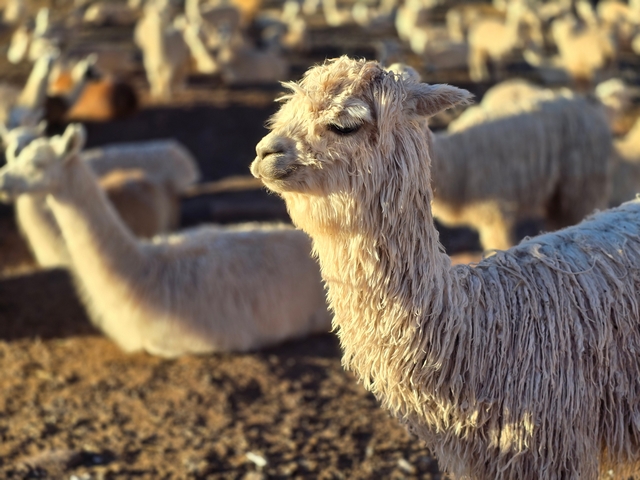
Portrait of a white alpaca bathed in morning sunlight, with the rest of the herd visible behind it.
Alpacas are smaller than llamas and raised primarily for their soft, hypoallergenic wool.
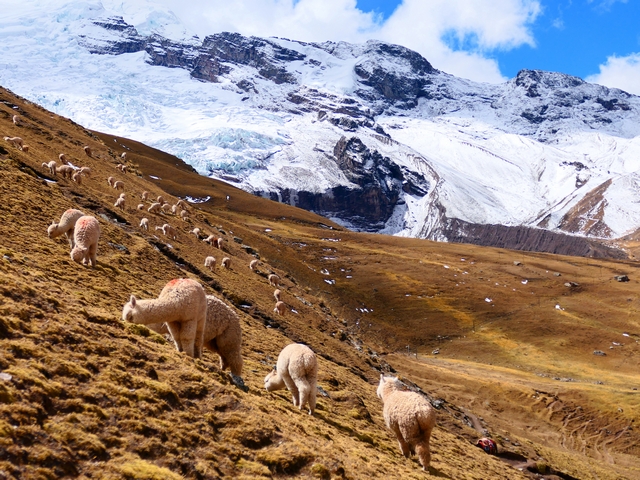
Dozens of fluffy white alpacas graze on a steep grassy hillside in Peru, with the glaciated slopes of Apu Ausangate in the background.
Hiking amidst vast herds of mewling, humming alpacas is a pretty Zen experience unique to Peru.
Two alpacas graze grass during a rain and hailstorm outside Anantapata Lodge near Ausangate, peru.
These alpacas are perfectly adapted for mountain weather, with hollow fibers that are warmer and lighter than sheep's wool.

Peru's High Andean Puna Ecosystem

While the high-altitude grasslands of Ausangate may appear bleak at first glance, a surprising abundance of life thrives in the Puna ecosystem. The tufts of ichu grass around you are adapted to low oxygen and freezing temperatures and provide forage for local camelids, including wild vicuñas (a wild ancestor of today’s domesticated alpacas).

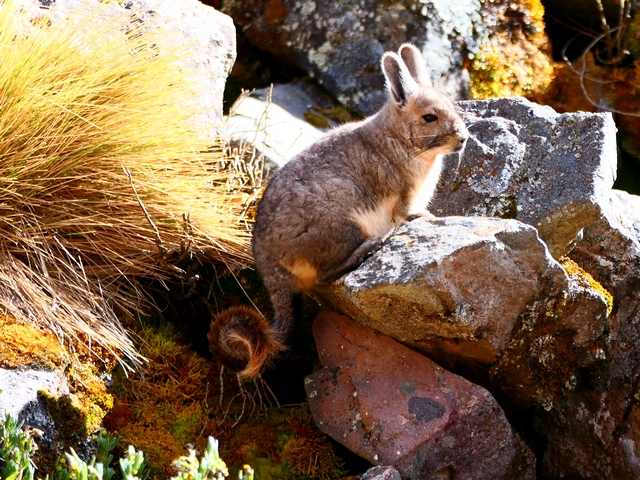
High-altitude wetlands with spongy vegetation attract a surprising diversity of birds and waterfowl, and watching the viscachas (a rabbit-sized rodent that looks like a chinchilla) scurry and bound about the rocks was one of my favorite pastimes.

A viscacha sitting in the rocks next to a tuft of Ichu grass in Peru's Puna ecosystem.
Viscachas are generalist herbivores who will eat pretty much anything, including the coarse tussock grasses that dominate the Puna.
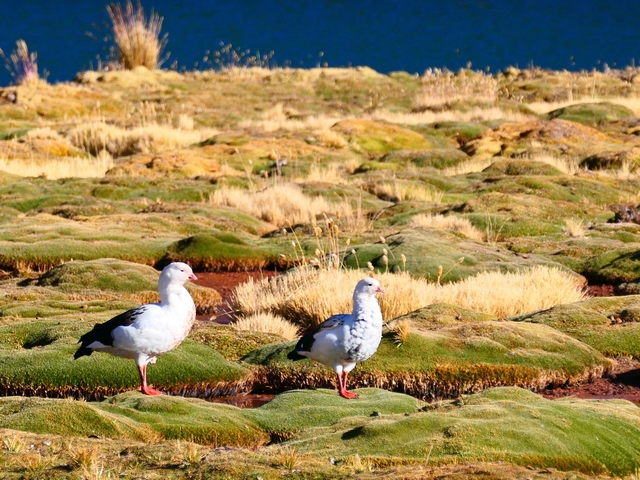
Two Andean geese stand on spongy vegetation in a high altitude wetland in Peru.
Andean geese are a common sight along the Trail of the Apu Ausangate, and they are almost always seen in pairs.

With over 110 bird species, 13 mammals, and a smattering of strange, hardy alpine plants, there is always something to stop and look at along the way.
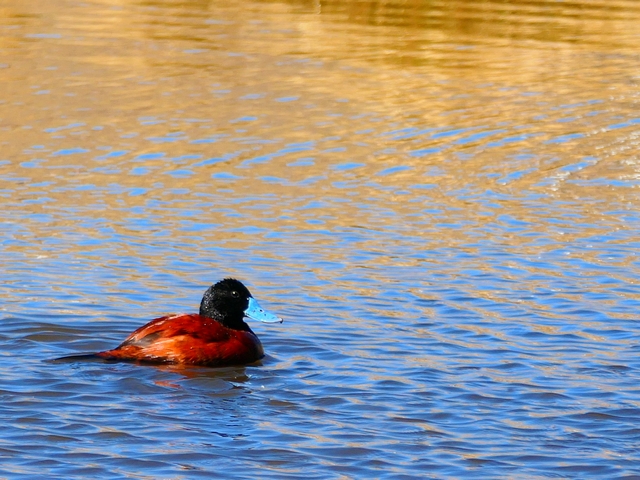
An Andean Duck with a black head and bright blue beak swims on a high-altitude lake in Peru.
Andean ducks are a common sight, and they are unmistakable with their bright blue beaks.
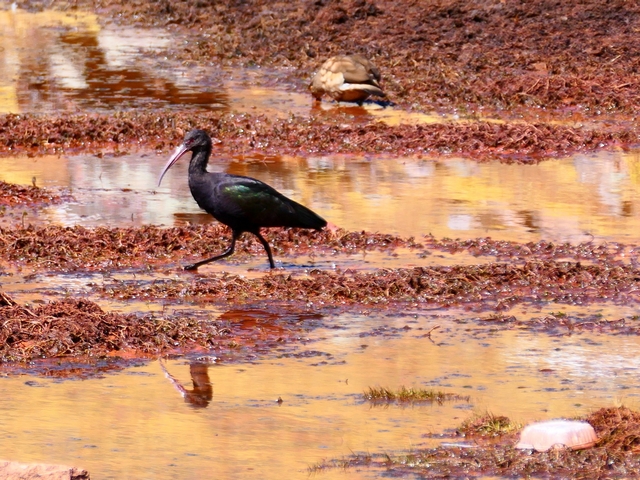
A Puna Ibis wades in a colorful, red-hued wetland near Ausangate, Peru.
The Puna Ibis has long toes that prevent them from sinking into the mud, and they are only found in the high-altitude wetlands of the Andes.
A large tuft of wooly cactus, known locally as Waraqu, near Chillca Lodge in Peru.
Wooly cactus, known locally as Waraqu, are protected from intense sunlight and freezing temperatures by their sharp spines.
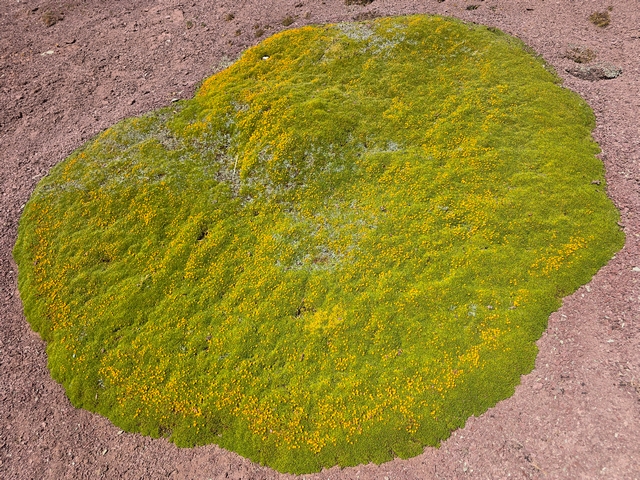
A bright green patch of lichen, dotted with yellow, stands out starkly against the red soils of Peru's Red Valley.
The vibrant green lichens and cushion plants of the Red Valley are stunning to behold, and take centuries to grow this big.
The Comforts of Lodge-Based Trekking

The Trail of the Apu Ausangate is a legit mountain trek in a high-altitude environment that can bring you harsh ultraviolet radiation, blazing sun, stiff winds, hail, or even snow – all in a single day! My days of tent-camping in such an environment are over, and the rustic comfort provided by the Ausangate lodges is just what the doctor ordered.

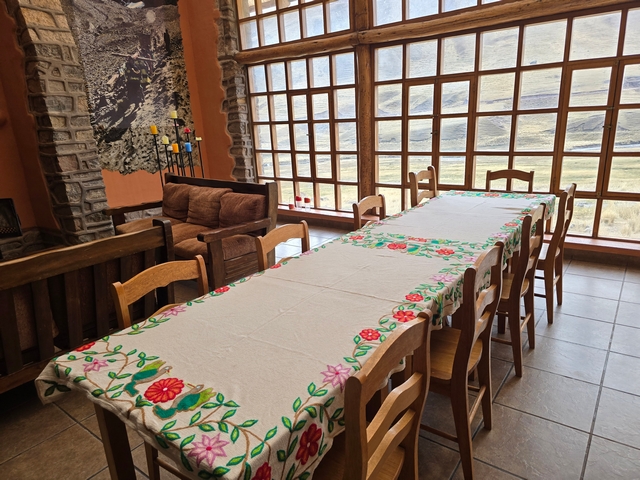
Inside view of Chillca Lodge, showing a large table with hand-emboridered tablecloth, and huge picture windows looking out toward Ausangate Mountain.
Indoor comforts with outdoor views is the place to be after a full day of trekking.

Each lodge has a local caretaker who keeps the wood-burning stove running and the candles lit at night. It’s incredibly comforting to step inside a warm, cozy lodge after a full day of hiking and be greeted with fuzzy alpaca-fur slippers, hot drinks, afternoon snacks, and a fulfilling dinner prepared by the chefs.

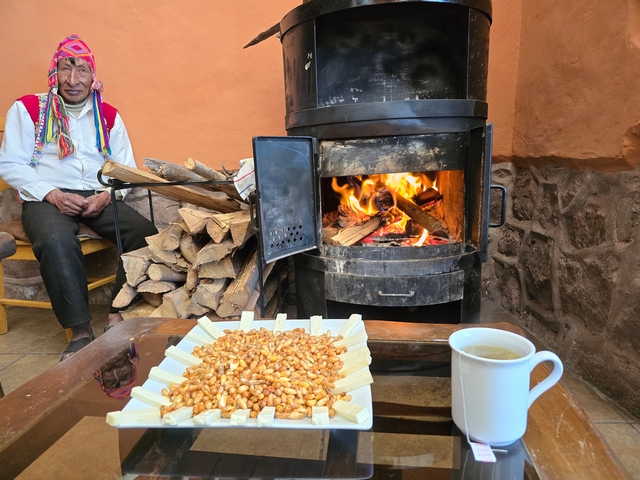
An Andean man sits next to a wood-burning stove, with a drink and corn snack on the table next to him.
A local caretaker keeps the woodstove burning, while the chefs keep the snacks and meals coming.

The morning Quechuan wake-up call sung by our two housekeepers, Rosa and Maria, always made me start the day with a huge smile. It was impossible not to catch the giggle bug that always seemed to overtake them before they could finish the song.

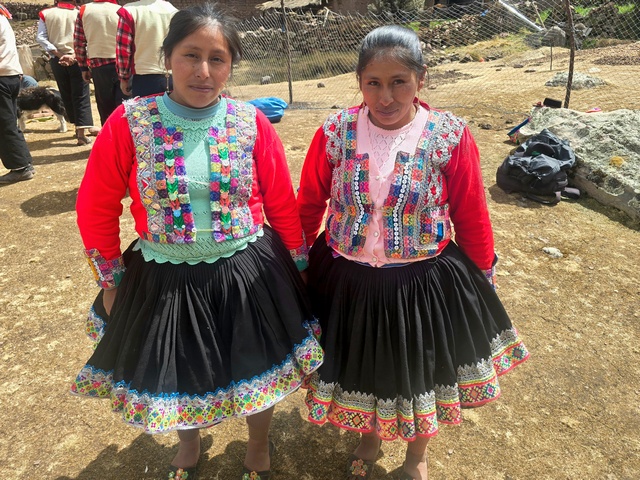
Two Andean women in traditional dress, with black skirts and bright red, hand-woven tops.
I loved feeling so welcomed and cared for by our housekeepers, Maria and Rosa.
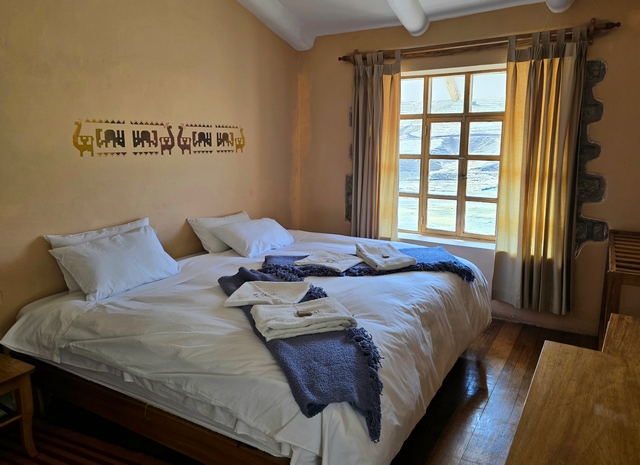
Simple room inside of Chillca Lodge.
Rooms inside the lodges are simple, with private bathrooms, hot showers, and comfortable beds.
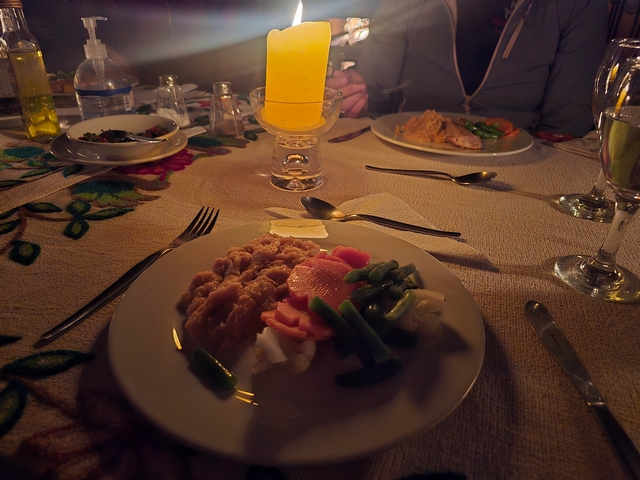
Candlelit dinner inside of Chillca Lodge, showing a candle burning and a plate of food.
We enjoyed candlelit dinners of delicious, locally-inspired meals prepared by the chefs.
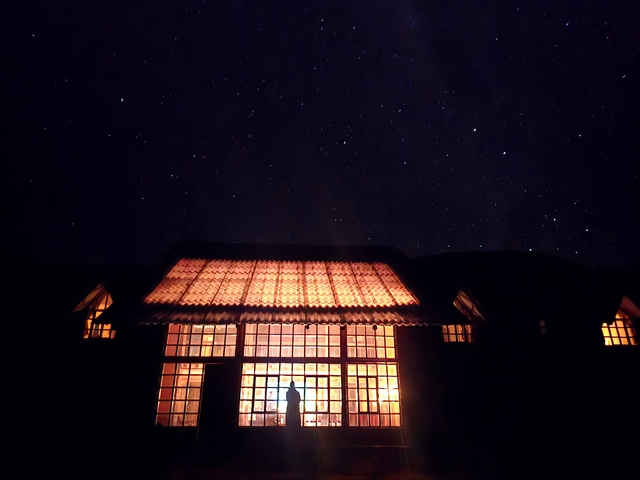
Huampococha Lodge illuminated at night, against a backdrop of a clear, dark, starry night sky.
Be sure to step outside the lodge after dark to enjoy incredible star-gazing under pristine night skies.

Planning Your Perfect Ausangate Adventure

The beauty of the Trail of the Apu Ausangate is that you can customize your adventure, spending anywhere from one night to six nights at the lodges. For travelers who want to see the spectacular Rainbow Mountain while avoiding the hordes of day-trippers that descend from Cusco each morning, a two-day trek with a night at Huampococha Lodge is an ideal option. Be careful, though – that’s how I fell in love with Ausangate and just had to come back!

Huampococha Lodge dwarfed by towering, red rocky mountains rising behind it.
An overnight stay at Huampococha Lodge will give you access to Vinicunca after all the day-trippers have gone home.

The best time of year to trek is during the dry season from May until September. We do not recommend trekking outside of those months due to the high elevation and potential for severe weather. Even during the dry season, however, mountain weather can be unpredictable – our trek narrowly missed a major snowstorm that blanketed Rainbow Mountain just three days after we left (maybe our offerings to the Apus and Pachamama helped us out a little!).

If you are a small group of one or two people, it’s possible to join scheduled group departures on various trekking routes. Larger groups, like our group of nine, can book an exclusive-use trek customized to the route you desire.

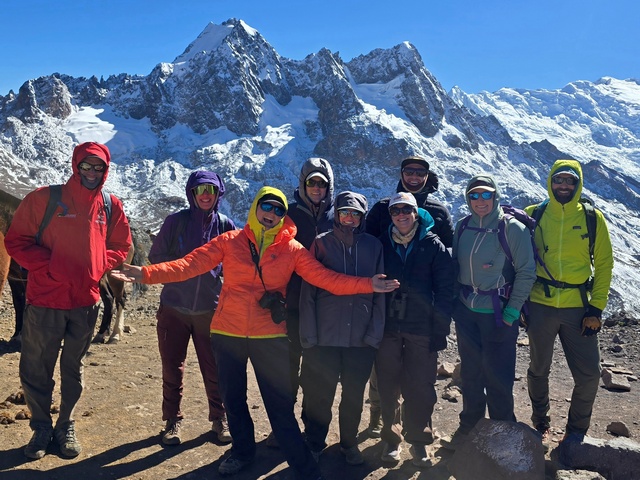
A group of nine trekkers bundled up in jackets on a sunny but windy day in Peru, with huge glaciated peaks and Ausangate behind them.
Having exclusive use of the lodges for our private group was awesome!

When you’re ready to experience the spectacular landscapes and Trail of the Apu Ausangate for yourself, reach out! It combines exceptionally well with a trip to Machu Picchu, and you can also continue onward to the shores of Lake Titicaca or the spectacular Colca Canyon.

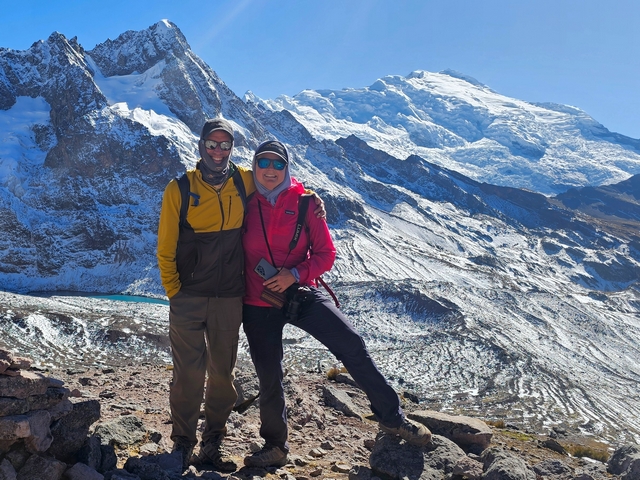
Two smiling trekkers standing with the huge, glaciated Apu Ausangate behind them on a crystal clear day in the high Andes of Peru.
We are all smiles after a stunning day trekking amongst the Apus.

Your Adventure Aficionado,

Alexis Alloway

Let’s Stay In Touch

Subscribe to our newsletter

Contact Us