Maasai Mara and Serengeti Safari: The Great Migration Month-by-Month

The greater Serengeti eco-system is one of the largest protected areas on the planet. Covering an area of more than 15,000 square miles (more than double the size of New Jersey!!) this region encompasses the Ngorongoro Conservation Area, the Serengeti National Park, the Maasai Mara National Reserve, and a large number of contiguous private reserves and concessions. This ecosystem is the stage for the most spectacular mammal migration on Earth.


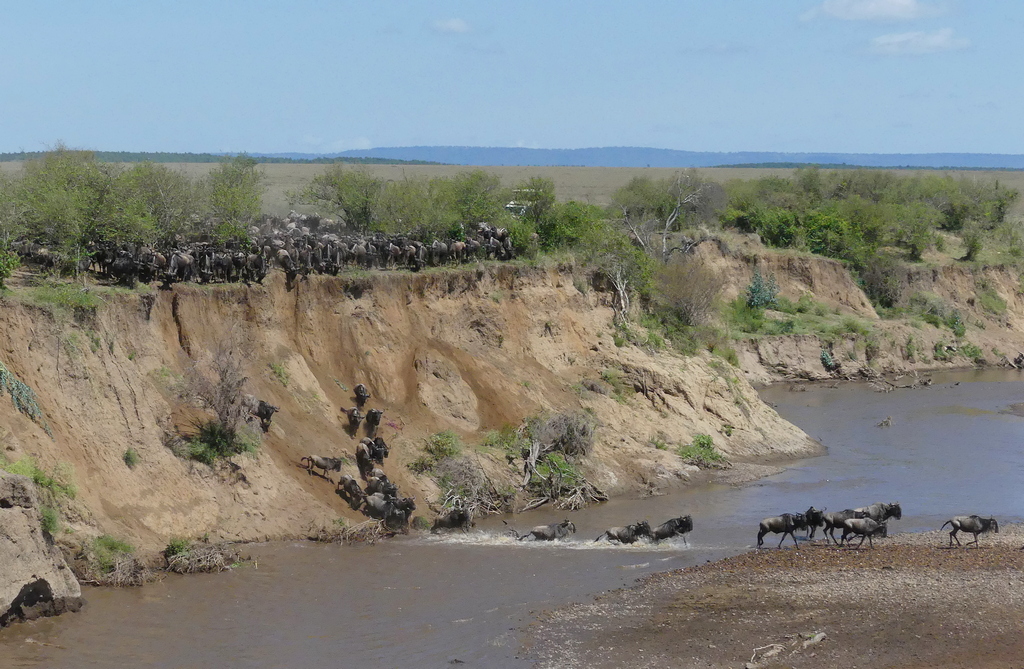
wildebeest crossing mara river Maasai Mara great migration safari

What is the Great Migration?

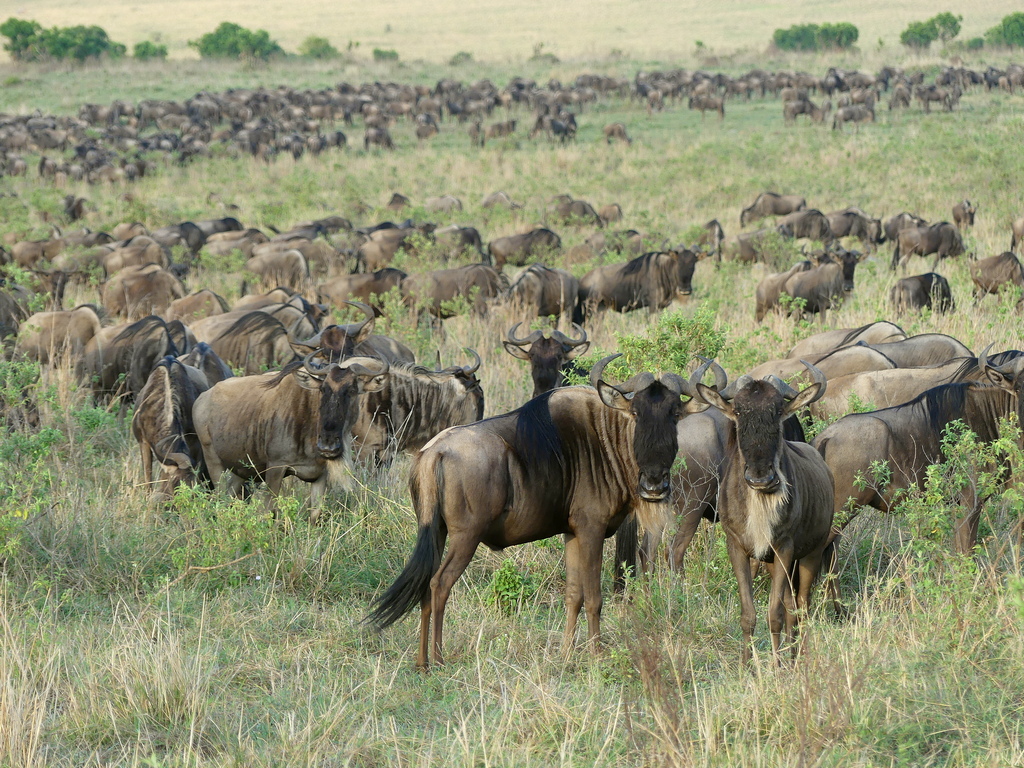
Each year, all year long, over 1.5 million wildebeests and more than hundreds of thousands of zebra walk a circular migration path through the greater Serengeti-Mara eco-system searching out green grazing and water. If all these wildebeest and zebra were to line up nose to tail, they’d reach from Los Angeles to Chicago! Over the course of their entire migratory loop, these amazing animals can cover up to 1,800 miles – that’s like walking from Los Angeles to Seattle AND BACK, every year! Witnessing herds of wildlife of this magnitude simply must be seen and even then, defies description. It is simply one of the most amazing things we have ever experienced.

herds of wildebeest grazing in the great migration maasai mara

When to See the Great Migration

Here’s what you need to know to be in the right place at the right time:

February – Early March

In late January through February, the wildebeest calving season begins as the herds congregate in the southern Serengeti. Over a two to three week period, an average of 8,000 calves can be born per day (over 300 per hour)! These newborns are highly vulnerable to predation by lions and cheetahs but with so many being born, there are simply too many for predators to eat. The calves can run as fast as an adult within two days of being born! This is a dramatic time to be here and there are fewer visitors compared to later in the year, which makes it a wonderful time to visit. The migration remains congregated in the southern Serengeti through January, February, and early March.

Mid-March – June

Two and a half months of long rains and thick mosquitoes last into early June. By May, the migration is typically heading north in building numbers on the western edge of the Serengeti before crossing the shallow Grumeti River en masse typically in June. As the rains end, June can be a good time to take advantage of early season pricing and thinner crowds ahead of peak season. Massive crocodiles lurk in the waters of the western Serengeti, surprising unsuspecting wildebeest as they head to the water to drink.

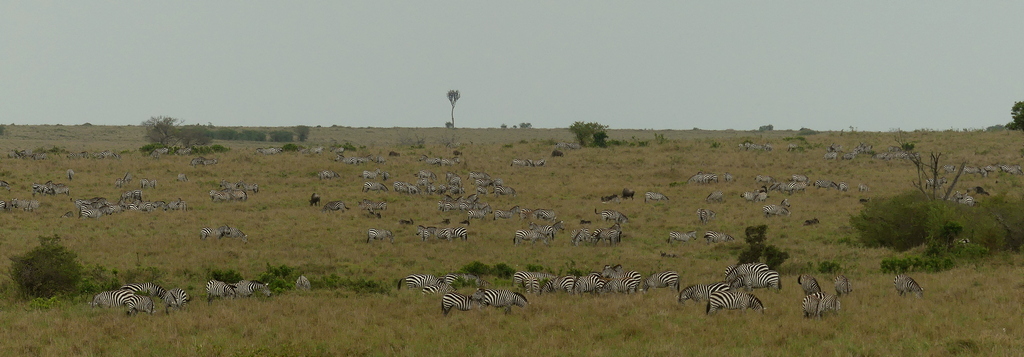
hundreds of zebras, part of the Great Migration, dot the grassy landscape of the Serengeti

July – September

By July, the herds have split up a bit, some heading up through the central Serengeti, and the rest father west in the Grumeti Reserve. By August and September, they have congregated along the most imposing obstacle on the entire migrator corridor: the mighty Mara River. This steep-banked river separates hungry herds from lush grazing in the Maasai-Mara Reserve of Kenya. The deep flowing water creates a challenging obstacle and confusion reigns as these herds try to find a way across. This is a prime opportunity for predators like crocodiles, unhappy hippos, and vultures waiting to clean up the aftermath. Crossings are chaotic and panic-driven and are truly one of the most dramatic spectacles on the continent. Thousands of frantic wildebeest leaping and falling off the riverbanks, rushing through the waters, swimming for their lives, getting confused, turning around and then turning around again! There’s no telling when these crossings happen so you’ll need a little luck and patience in order to catch this. This is also peak season, so its unlikely to have a crossing all to yourself – you’ll need a pro-guide who knows both where to go and how to get you in the best spot to witness the event.

October – January

As all of the green grass is devoured by the hungry herds, and what remains begins to dry out from lack of rain, the herds begin to head back south toward the Serengeti, again crossing the Mara River. The short rains begin in late October and early November, As the grass grows, the zebra and wildebeest work symbiotically – zebras eating the long grass which exposes the short grass preferred by the wildebeests. It’s not too late to still visit – one of the most amazing river crossings we ever saw was at the end of October! Through December and into January the migration continues to push south and congregate on the edge of the Ngorongoro Conservation Area on the southern edge of the Serengeti in time for the February calving season and the beginning of the entire cycle again.

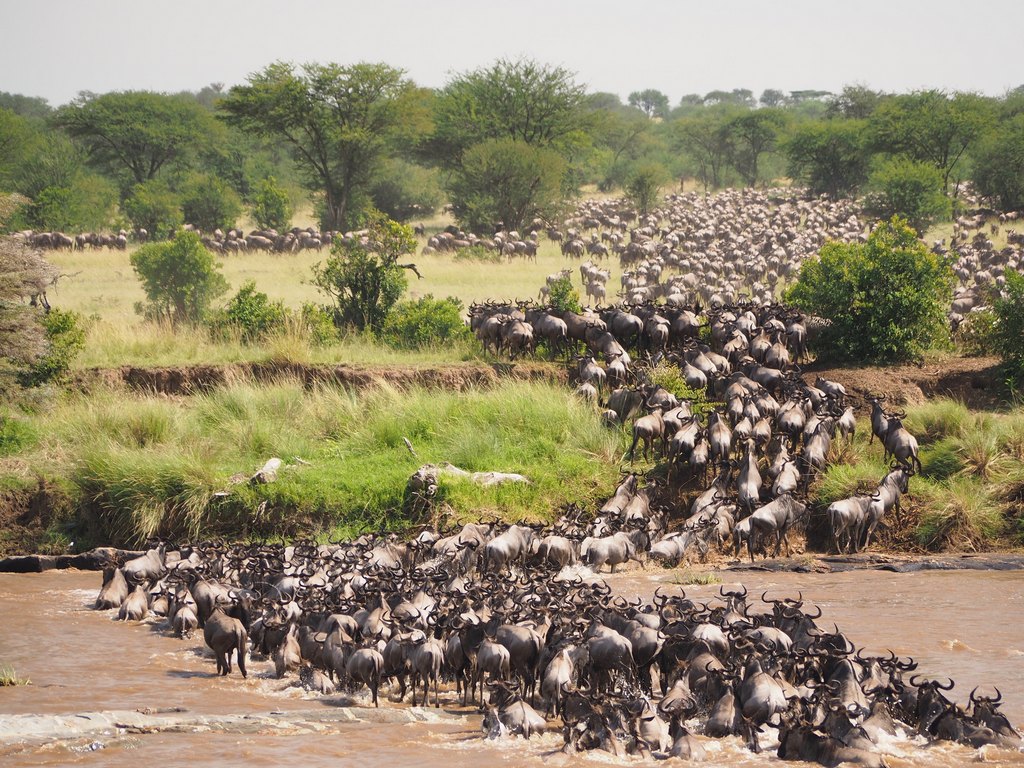
 

wildebeest crossing the mara river during the great migration

When Should I Book My Great Migration Safari?

The most popular time is June through October when the weather is stable and dry. This is a great time to witness dramatic river crossings and huge herds throughout most of the northern Serengeti and Maasai Mara. Another popular time is in January and February, when you can catch the calving season in the southeastern part of the park. As long as you avoid the long rainy season, you should be fine – but you’ll need to make sure you are planning to visit the right place and stay at the appropriate camp to be in position for the best wildlife sightings.

Pro Tip

Not every animal migrates, only the zebras and wildebeest and some impalas. Predators like lions, leopards and cheetahs are typically residents. Elephants, giraffes, hippos and other plains game like impalas and eland also tend to stay put. This means that you should definitely not rule out visiting other, quieter areas in the park away from where the Great Migration is. Some of our best wildlife sightings (nine baby lions!) were located hundreds of miles away from the migration.

Check out our video of a dramatic river crossing here.

Are you ready to plan your once-in-a-lifetime trip to the Serengeti? Call me – I’ve been there!

Your friendly African expert,

Chris Moriarty

Let’s Stay In Touch

Subscribe to our newsletter

Contact Us